⚠️ Disclosure: This post contains Amazon affiliate links. We may earn a commission at no extra cost to you.
As we commence our wild camping adventures this summer, it’s vital that we’re prepared for the unique challenges the season brings. We’ve all heard stories of campers caught off guard by intense heat, dehydration, or unexpected wildlife encounters. But what are the essential safety tips we should keep in mind? From choosing the right campsite to managing food safety in the wilderness, there’s a lot to ponder. Let’s explore some key strategies that’ll not only keep us safe but also enhance our outdoor experience. After all, a well-prepared camper is a happy camper, and there’s more to summer safety than meets the eye.


Key Takeaways
- Choose shaded campsites to reduce heat-related risks and protect from excessive sun exposure.
- Stay hydrated by drinking 2-3 liters of water daily and planning activities during cooler hours.
- Use broad-spectrum sunscreen, wear protective clothing, and seek shade during peak sun hours.
- Practice proper food safety by packing in waterproof containers and separating raw from cooked foods.
- Be prepared for sudden weather changes by monitoring forecasts and packing appropriate gear.
Choose a Shaded Campsite
When it comes to wild camping, choosing a shaded campsite is essential for your summer safety. We’ve learned from experience that a cool spot can make all the difference in our outdoor adventures. Did you know that a shaded campsite can considerably reduce the risk of heat-related illnesses? It’s true! By setting up camp under trees or near large rocks, we’re not only keeping ourselves comfortable but also protecting our skin from sunburn. Ever had your food spoil on a camping trip? A shaded area can help prevent that too. Plus, it’s easier to stay hydrated when you’re not baking in the sun. So, next time you’re out in the wild, look for that perfect shady spot. Your body (and your taste buds) will thank you!
Stay Hydrated in the Heat
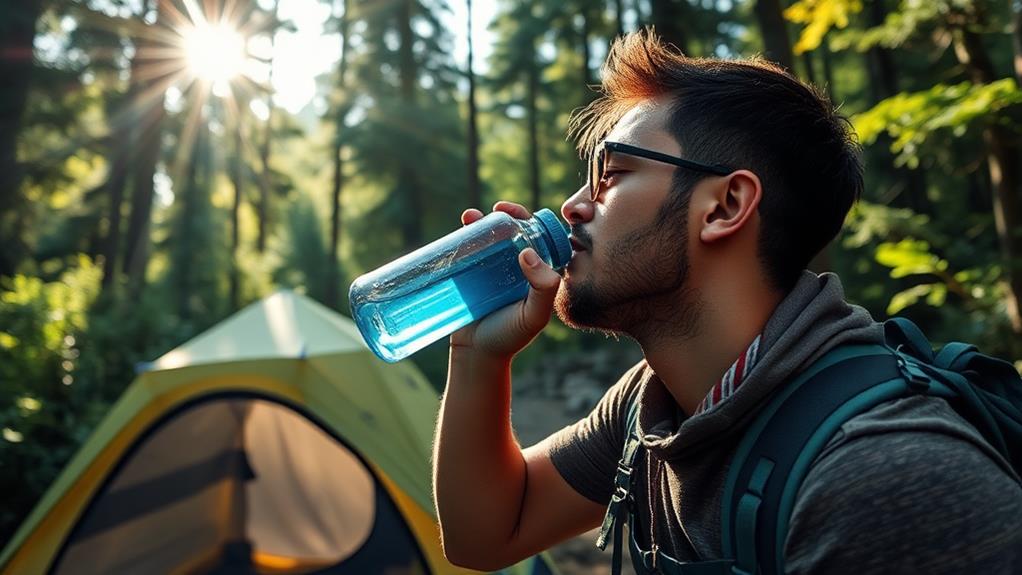
Thirst is a camper’s constant companion in the summer heat. To stay hydrated in the heat, we’ve got to be smart about our water intake. We’re talking at least 2-3 liters a day, folks! But what if we run out? No worries! A portable water filter or purification tablets are our best friends when it comes to tapping into natural water sources. Remember, dark urine or dizziness are our body’s way of shouting, “Hey, drink up!” We’ve found that planning our adventures during cooler hours is a game-changer. And here’s a tasty tip: munch on hydrating foods like juicy fruits and veggies. They’re nature’s water bottles! By following these strategies, we’ll keep our wild spirits high and our bodies well-hydrated. Cheers to that!
Protect Against Sun Exposure
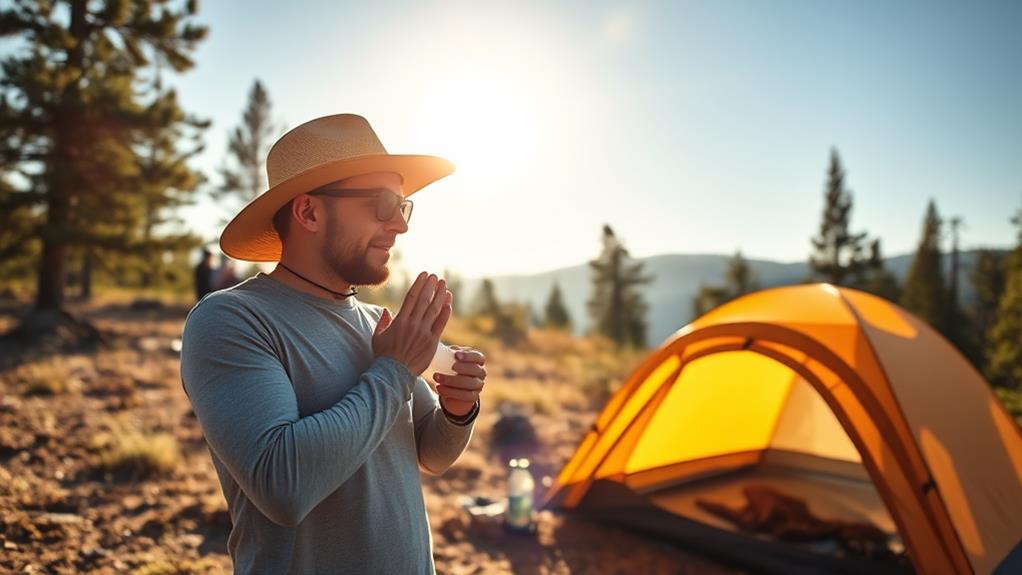
Protection from the sun’s fierce rays is a essential part of our summer camping arsenal. We’ve all felt that sting of a nasty sunburn, right? Let’s avoid that pain and protect our skin. First things first, slather on that broad-spectrum sunscreen with at least SPF 30. Don’t forget to reapply every couple of hours, especially after a dip in the lake! We’re all about freedom in the wild, but trust us, protective clothing is your friend. Rock those long sleeves and wide-brimmed hats like a true outdoor fashionista. And hey, while we’re at it, let’s shield our peepers with UV-protective shades. Remember, the sun’s at its fiercest between 10 a.m. and 4 p.m., so seek some shade during those hours. Stay hydrated, too – it’s essential when battling sun exposure!
Manage Food Safety Outdoors

Now that we’ve covered sun protection, let’s talk grub. Food safety in the wild is no joke, folks! We’ve got to keep our eats clean and critters away. Pack those vittles in tight, waterproof containers and use coolers to keep things chilled. When it comes to raw meat, double wrap it and cook it thoroughly. Remember, 160°F for pork and beef, 165°F for chicken.
Want to avoid a campsite disaster? Here’s our top three food safety tips:
- Wash hands often, especially before handling food
- Separate raw and cooked foods to prevent cross-contamination
- Clean up all trash and scraps after meals
We’ve seen too many campers learn the hard way. Trust us, you don’t want to spend your wild adventure hugging a tree for… other reasons. Stay safe, stay clean, and enjoy that freedom!
Prevent Heat-Related Health Issues

Every summer, countless campers face the risk of heat-related illnesses. We’ve all been there, sweating buckets and feeling dizzy on a scorching day. But fear not, fellow freedom-seekers! Let’s tackle heat exhaustion head-on with some outdoor safety tips for your next camping trip.
First, hydration is key. We’re talking at least a gallon of water daily, folks! And hey, why not schedule those grueling hikes for cooler hours? Your body will thank you.
Here’s a handy table to keep you cool and collected:
| Beat the Heat | Stay Safe |
|---|---|
| Drink water | Wear light clothes |
| Take breaks | Seek shade |
| Morning hikes | Recognize symptoms |
| Loose clothing | Hydrate more |
| Cool off often | Listen to your body |
Handle Campfires With Caution
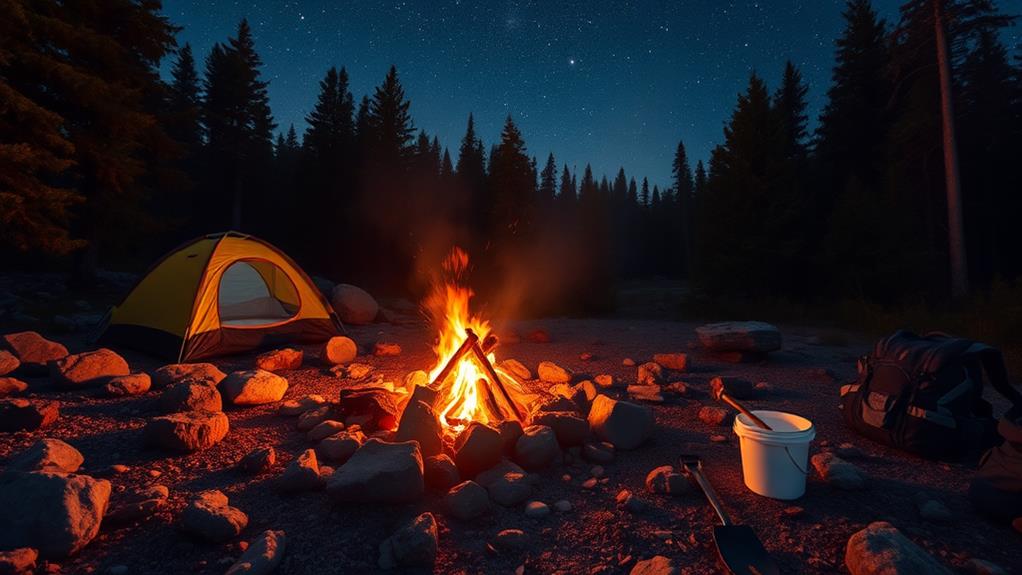
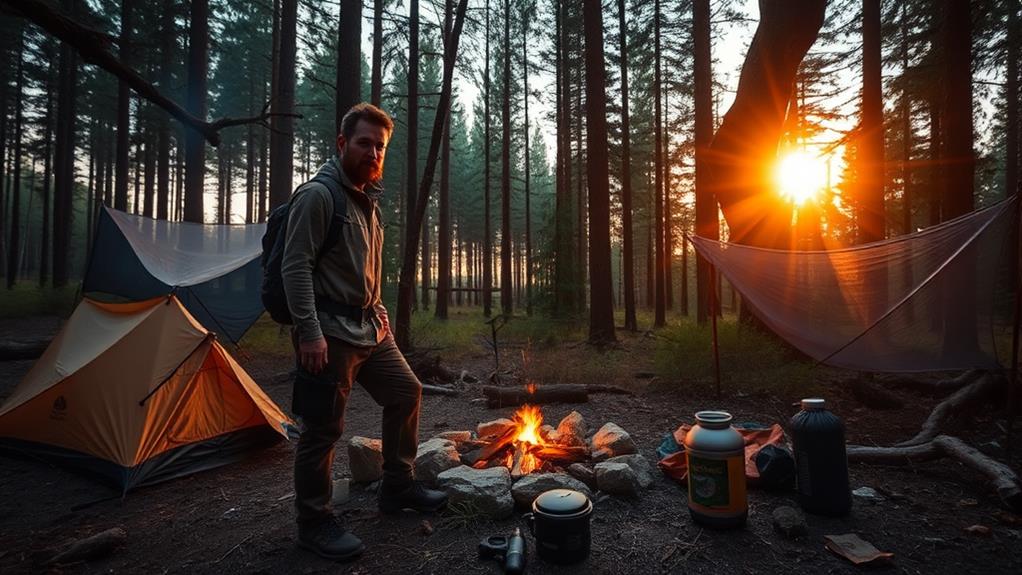
While staying cool is essential, let’s turn our attention to another hot topic: campfire safety. We’ve all gathered around a crackling fire, sharing stories and roasting marshmallows. But remember, with great campfires come great responsibilities! Here are some camping safety tips to keep in mind:
- Keep your campfire at least 15 feet from tents and plants
- Use designated fire pits when available
- Always have water or a shovel nearby
It’s vital to never leave a fire unattended – we don’t want any unexpected blazes! When possible, stick to established fire pits to minimize our impact on nature. Before hitting the hay or heading out, make sure those embers are completely extinguished. And hey, let’s always check local regulations – sometimes fire restrictions are in place to keep our wild spaces safe.
Recommended Products

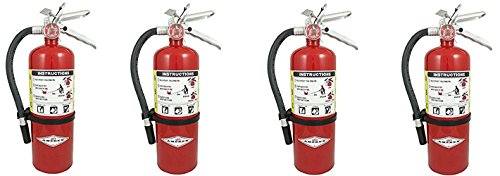
Chemical & Capacity: ABC Dry Chemical, 5 Pounds
Be Aware of Wildlife

Encountering wildlife can be one of the most thrilling aspects of camping, but it is crucial to remember we’re guests in their home. When we’re out in the great outdoors, especially in bear country, we need to be smart about our safety. Let’s break down some key tips:
| Wildlife Safety Tips | Why It Matters | How to Do It |
|---|---|---|
| Secure Food | Prevents attracting wild animals | Use bear-proof containers |
| Learn Animal Signs | Helps identify bear activity | Study scat and tracks |
| Make Noise | Avoids surprise encounters | Talk or sing while hiking |
Plan for Sudden Weather Changes

Just as we need to be prepared for wildlife encounters, we’ve got to be ready for Mother Nature’s mood swings. Weather in the wild can turn on a dime, so we’ve gotta stay on our toes. Keep an eye on those forecasts, folks! Pack smart with layers and waterproof gear – you’ll thank yourself later. And don’t forget that emergency radio or weather app for those off-grid adventures.
Here’s what sudden weather changes might look like:
- Dark clouds rolling in faster than you can say “raindrops”
- Wind picking up, making the trees dance like nobody’s watching
- Temperature dropping quicker than your campfire spirits
Frequently Asked Questions
What Is the Number 1 Rule of Wild Camping?
The number one rule of wild camping is Leave No Trace. We must respect nature’s freedom by minimizing our impact. Let’s master campfire etiquette, prepare for wildlife encounters, hone our navigation skills, and gear up responsibly for our wild adventures.
What to Avoid When Camping in the Woods?
Like moths to a flame, we’re drawn to nature’s embrace. Let’s avoid wildlife encounters by properly storing food, practice fire safety, and stay weather-prepared. We’ll steer clear of low areas, widowmakers, and flood-prone spots for our wild freedom.
Is Wild Camping Safe?
We’ll tell you straight: wild camping can be safe if we’re prepared. With the right gear, wildlife know-how, fire safety skills, and navigation chops, we’re set for adventure. It’s about embracing freedom responsibly, fellow wanderers!
How to Be Safe While Tent Camping?
We’ve found that safety’s not just about rules, it’s about freedom through preparedness. Let’s master fire safety, avoid wildlife encounters, stay hydrated, and choose campsites wisely. Together, we’ll embrace the wild while keeping our wits about us.