

⚠️ Disclosure: This post contains Amazon affiliate links. We may earn a commission at no extra cost to you.
When Mother Nature decides to put on an electrifying light show during our wild camping adventures, we’d be remiss not to take proper precautions. As novice campers, we’re often enthusiastic to embrace the great outdoors, but we can’t overlook the importance of thunderstorm safety. We’ve compiled a list of 10 essential tips to help keep you safe when the skies darken and the rumbles begin. These tips aren’t just helpful; they could be the difference between a thrilling outdoor experience and a dangerous situation. So, what are these vital safety measures that every wild camping novice should know?


Key Takeaways
- Monitor weather forecasts regularly and follow the 30/30 rule for seeking shelter during thunderstorms.
- Choose camping locations with natural protection like dense forest canopies and lower elevations.
- Avoid tall trees, open fields, and bodies of water during storms; seek shelter in vehicles or designated structures.
- Prepare emergency supplies, including a weather radio, insulating gear, and enough food and water for 72 hours.
- Practice safe behavior during storms, such as keeping feet together and using insulating materials to elevate from the ground.
Monitor Weather Forecasts Regularly
Keeping an eye on weather forecasts is essential for wild camping safety during thunderstorms. We’ve learned the hard way that Mother Nature can be unpredictable, so it’s vital to stay informed. Before hitting the trails, we always check reliable weather apps or websites for the latest updates. During our trips, we keep an ear out for those telltale rumbles of thunder and watch for sudden temperature drops or wind changes. Remember the 30/30 rule? If you hear thunder within 30 seconds of seeing lightning, it’s time to seek shelter pronto! We’ve found that investing in a weather radio tuned to frequency 162 is a game-changer, especially in areas with spotty cell service. By staying weather-wise, we can enjoy our wild camping adventures while keeping safe from unexpected storms. What’s your go-to method for tracking weather on the trail?
Recommended Products

Ultra Brightness: Each work light use 28PCS high quality 5W Osram led chips, total 140 watts, outputs super bright 15560LM light to illuminate the entire road ahead, 596Meter@1LUX, 10Meter@3560LUX. Features a trusted, amazing, and long-lasting brightness without performance failure

Ultra Brightness:Each work light use 12PCS high quality led chips, outputs super bright 6000K cool white to illuminate the entire road ahead. Features a trusted, amazing, and long-lasting brightness without performance failure. No dark spots or shadow areas, no blinding or glare to oncoming drivers, avoiding scattered light problem to ensure safety

NOAA Weather Scan + Alert: NOAA Weather Scan will automatically scan through 10 available weather (WX) band channels and locks onto the strongest weather channel to alert you of severe weather updates. NOAA Weather Alert will sound an alarm indicating that there is a risk of severe weather in your area. NOAA Weather Radio will also be used to broadcast AMBER alerts for missing children.
Choose Safe Camping Locations
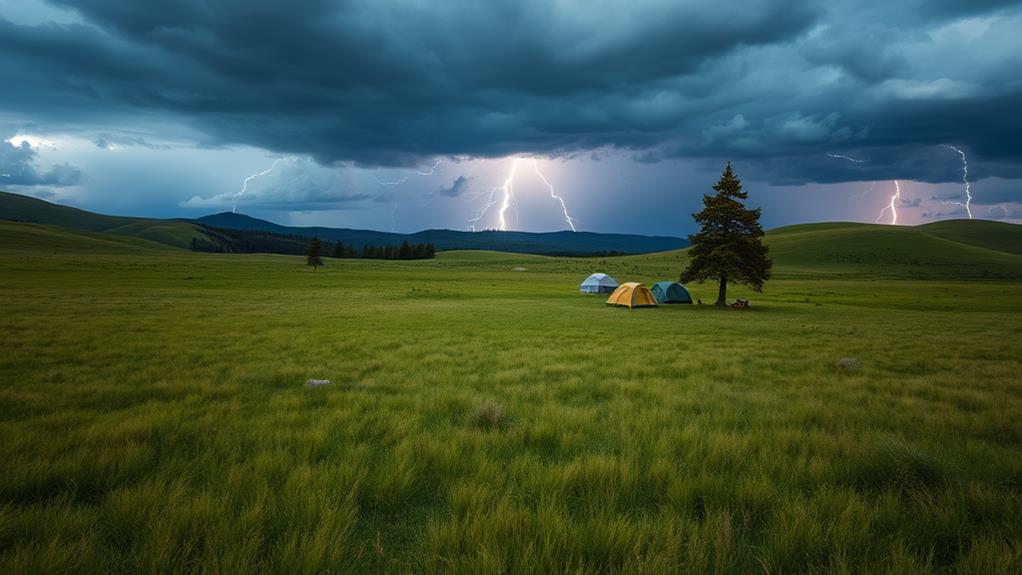
A crucial aspect of thunderstorm safety during wild camping is selecting the right spot to pitch your tent. We’ve learned the hard way that not all campsites are created equal when it comes to lightning strikes! To find a safe place, let’s picture the ideal spot:
- Dense forest canopy overhead, shielding us from the storm’s fury
- Lower elevation, nestled away from exposed ridges and open fields
- Natural barriers like hills or thick vegetation, protecting us from wind and flooding
Prioritize Proper Shelter Options
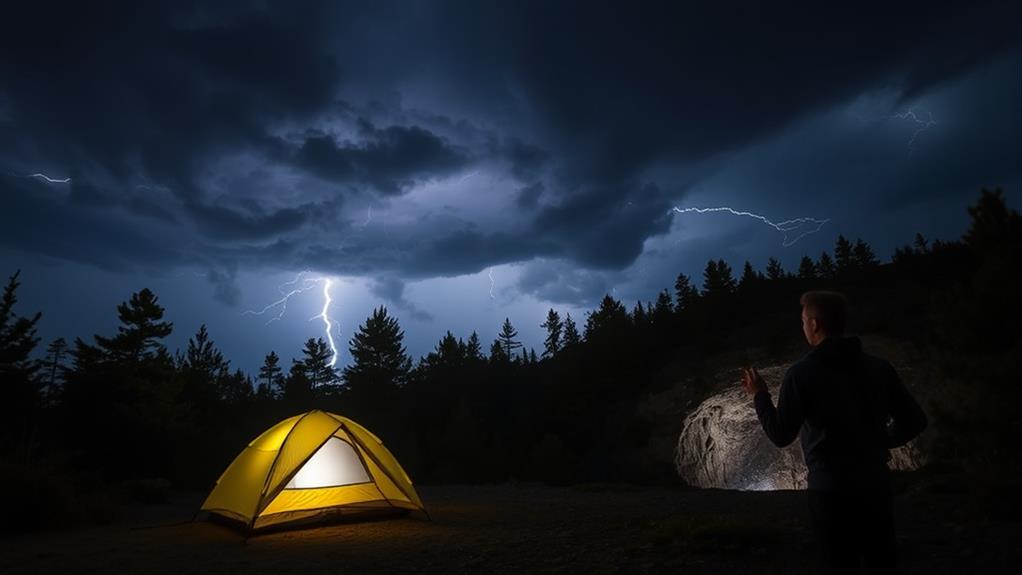
Prioritizing proper shelter options can mean the difference between life and death during a thunderstorm. We’ve learned the hard way that our trusty tents won’t cut it when it comes to protection against lightning. So, what’s a freedom-loving camper to do? First off, let’s ditch the idea of huddling under tall trees or in open fields. Instead, we’ll scout out lower ground with some tree cover for better shelter. But here’s the real game-changer: if you’re car camping, your vehicle can be your savior! That metal roof acts like a Faraday Cage, keeping you safe as long as you don’t touch any metal inside. And if we’re lucky enough to be in a state park, those designated emergency structures are our best bet. They’re built to withstand Mother Nature’s fury!
Recommended Products

FULL SIZE - Our tarps are cut larger so they finish true to size (+/- 3%). For example, an 8x10 is really 8 feet by 10 feet!

【SAVE YOUR MONEY!!! Durable Booth, Reduce Replacement】①High strength 210D Oxford material+PU coatings used in the manufacturing of this booth make its more sturdy.②Come with well-crafted design allows for easier access for vehicle and painter.③the installation of heavy-duty double zippers make it can stand more pressure.④The paint booth includes hooks for hanging lamps or lightings to guarantee your visibility at night.⑤The top & bottom D-shaped rings make easy for you to fasten the booth.

[Upgraded Rooftop Tent Hardshell to 100% Market Excellence] - HEYFUN roof top tent RTT, directly from the industry-leading manufacturer, are standout options with attachable side awning and built-in LED light strip, perfect choice for camping enthusiasts and seasoned adventurers of all levels valuing quality and affordability.
Prepare Emergency Supplies
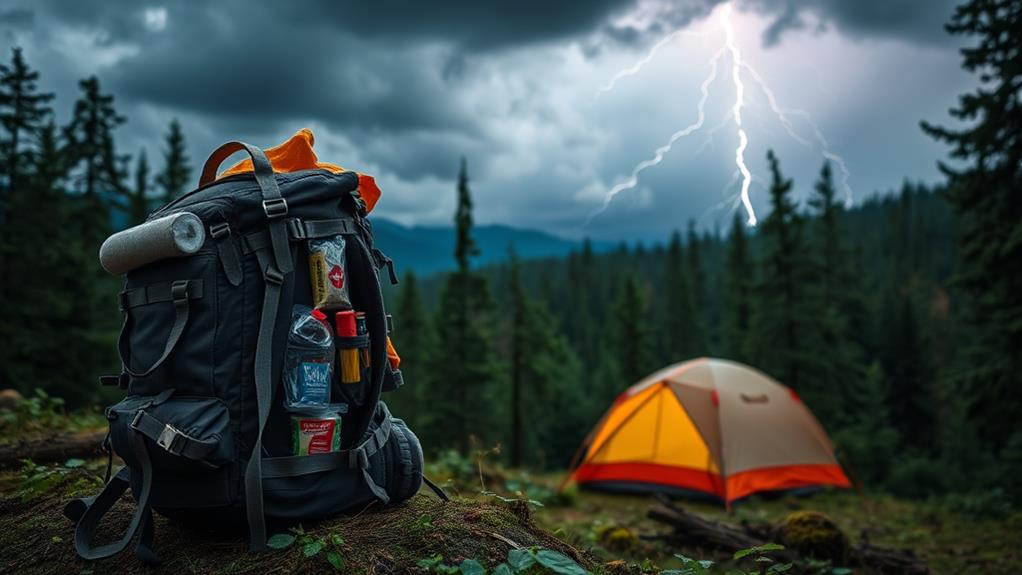
Now that we’ve got our shelter sorted, let’s talk about what we’ll need inside it. When it comes to preparing for wild weather conditions, we can’t stress enough the importance of a well-stocked first aid kit. Trust us, you’ll thank yourself later! We always make sure to pack:
- A fully charged weather radio for staying in the loop
- Enough grub and water to last 72 hours (think canned beans and trail mix)
- Insulating gear like closed-cell pads to keep us safe from lightning
Recommended Products

SURVIVAL KIT FOR EXTREME EMERGENCIES: This 72-hour survival kit bug out bag includes 291 pieces of essential gear to assist two adults during disasters, evacuation, or outdoor survival. Includes shelter, water filter, food, tools, first aid, hygiene, lighting, and a 45L emergency backpack. Ideal for preparedness at home, in a vehicle, or packed for grid-down scenarios.

Coast Guard Approved First Aid Kit: Coast Guard Approval #160.041/23/0 ensures this marine first aid kit meets rigorous maritime safety standards

Pro Series Design: Equipped with hospital-quality tools, this professional first aid kit ensures preparedness for backcountry emergencies
Understand Lightning Risks
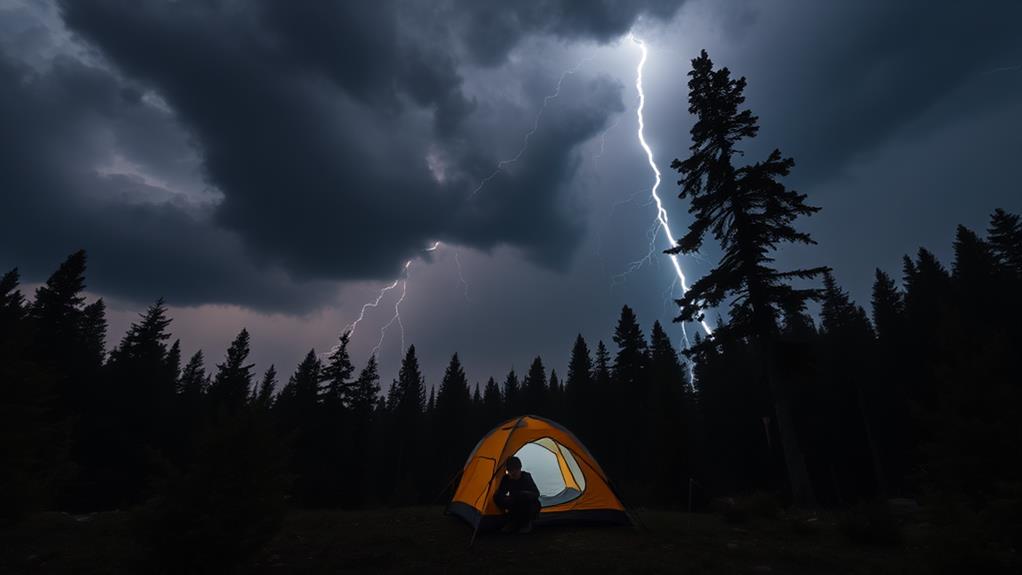
Understanding lightning risks is essential when wild camping. We’ve all heard the usual advice, but let’s dig deeper. Did you know that most lightning injuries aren’t from direct strikes? It’s true! Step voltage is the real culprit, causing about half of all hospitalizations. Imagine this: you’re standing with your feet apart, and zap! The electricity travels right through you. Yikes!
But wait, there’s more! Side flashes are another sneaky danger. Ever camped near a tall tree during a storm? Not a great idea. Those trees can act like lightning rods, sending sparks your way. So, what’s the takeaway? Stay away from tall objects and keep your feet close together if you’re caught in a storm. Remember, being prepared and understanding these risks can make all the difference in our wild adventures!
Practice Safe Behavior During Storms
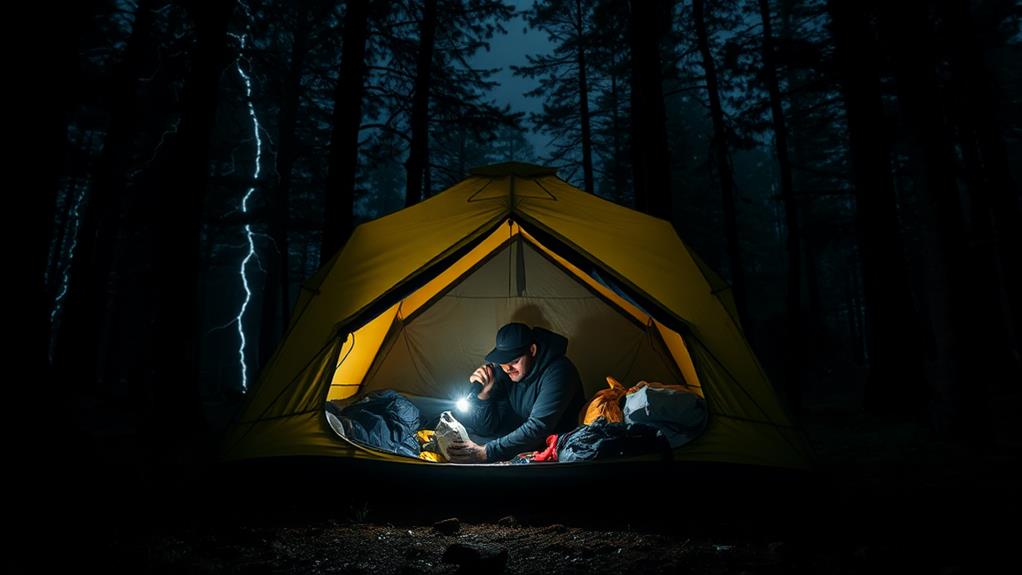
Safety during a thunderstorm can make the difference between a thrilling adventure and a dangerous ordeal. When we pitch our tent, let’s remember: location matters! We don’t want to attract lightning, so let’s avoid high ground and tall trees. Once inside, we’ll crouch in the center, away from metal frame parts. Remember, freedom-seekers, insulation is key!
Here’s a quick safety checklist:
- Count seconds between lightning and thunder (5 or less means danger’s close!)
- Use backpacks or air mattresses to elevate ourselves
- Keep those hiking boots on for extra protection
I once rode out a wild storm in my tent, and let me tell you, it was both exhilarating and nerve-wracking. But by following these tips, we stayed safe and dry. Isn’t that what wild camping’s all about?
Avoid Dangerous Terrain Features
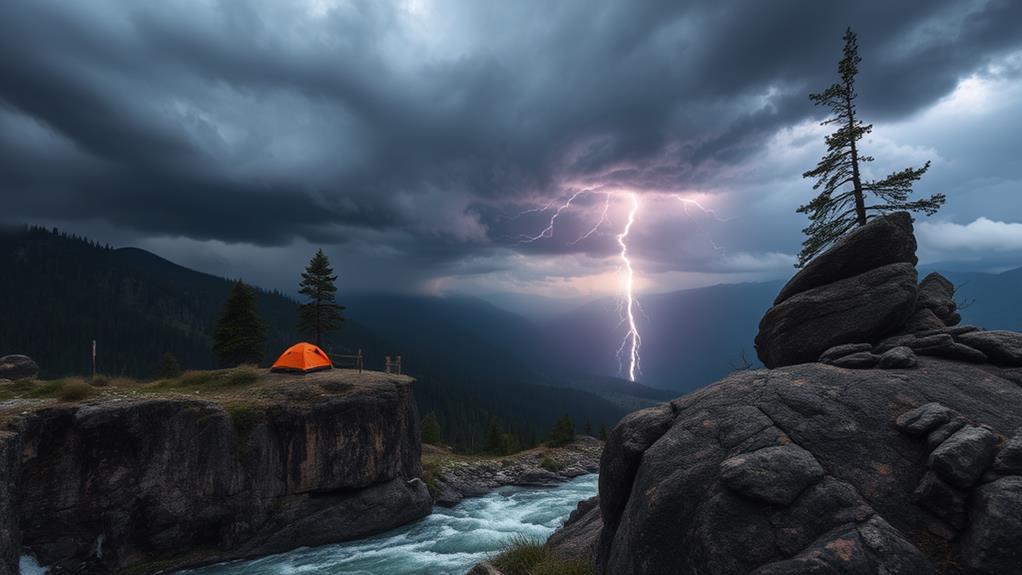
While we’ve covered how to stay safe during a storm, let’s focus on choosing the right spot to set up camp in the first place. We’ve learned the hard way that some terrain features are like lightning rods! Open fields, mountain peaks, and areas above the treeline? Not strong enough to protect us from those nasty lightning strikes. And don’t even think about pitching your tent near tall, lonely trees or bodies of water. Trust me, we’ve had some close calls!
Instead, let’s seek out the cozy embrace of dense forests. They’re our natural guardians against wind and lightning. But watch out for low-lying areas and riverbanks – flash floods are no joke. Remember, we’re out here for adventure, not to become part of nature’s light show. So, where are you planning to set up camp tonight?
Maintain Group Communication
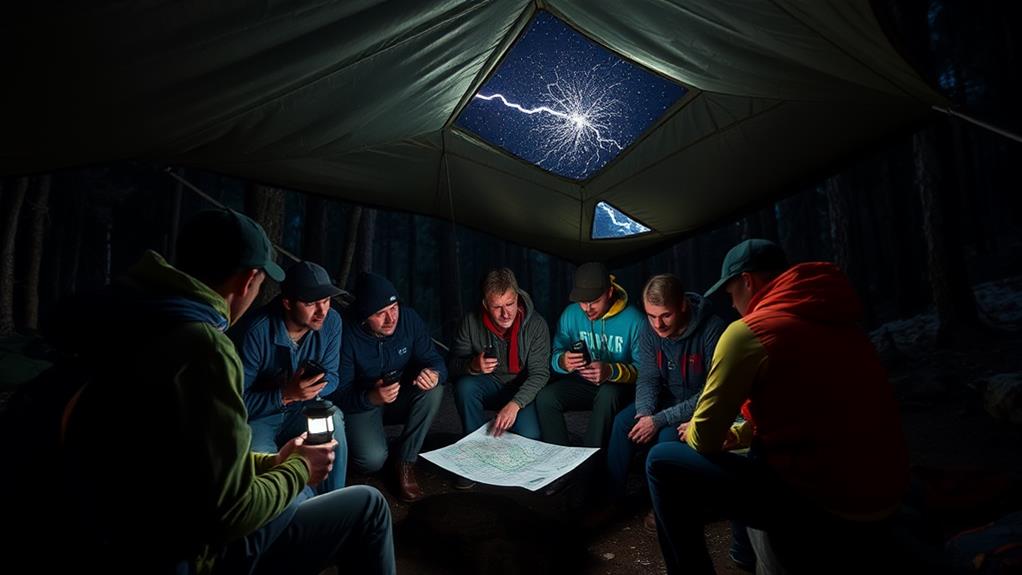
Let’s huddle up and talk communication, folks! When you’re out in the wild, staying connected can be a real lifesaver during a thunderstorm. Trust me, I’ve learned this the hard way! Before you hit the trails, make sure everyone’s on the same page:
- Establish a clear communication plan
- Designate a safe meeting point
- Keep those weather radios and cell phones charged
Recognize Post-Storm Hazards
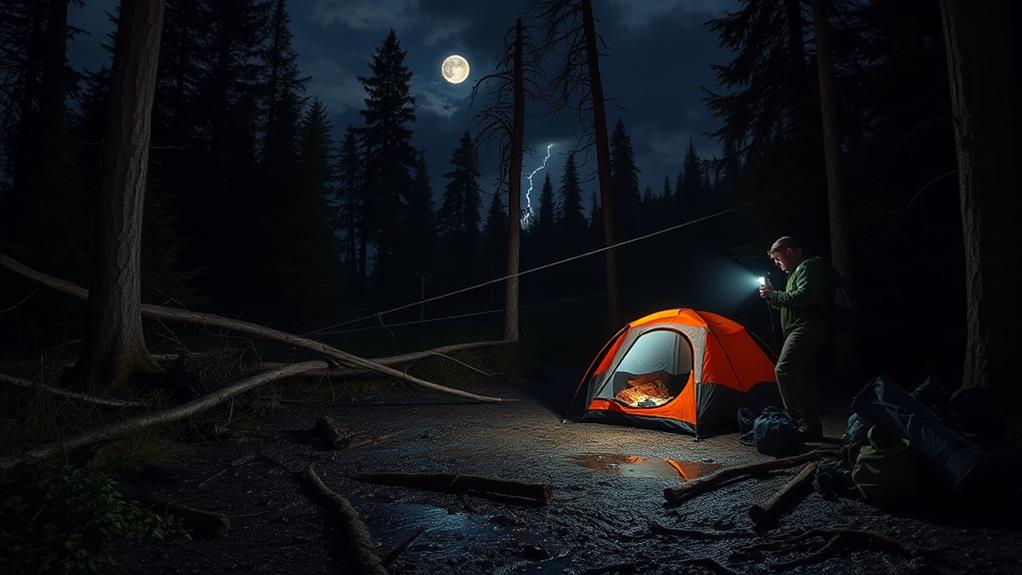
Alright, now that we’ve got our communication sorted, it’s time to talk about what happens after the storm passes. We’ve all been there, right? You’re out in the wild, and suddenly you got caught in a thunderstorm. It’s like nature’s light show, but without the fun. Once it’s over, don’t rush back to your campsite like nothing happened. Remember that time we almost got hit by lightning? Yeah, let’s avoid that again. First things first, scan the area for fallen branches or damaged trees. They’re like nature’s booby traps waiting to surprise you. Next, check for flooding. Trust me, waking up in a puddle isn’t fun. Look out for sharp objects or debris, and wait for the all-clear from the authorities.
Recommended Products

DREAM LED WITH 316 MODES/30 DIFFERENT COLORS INCLUDES CHASING
14 BUTTON REMOTE WITH INSTRUCTIONS
Learn Basic First Aid
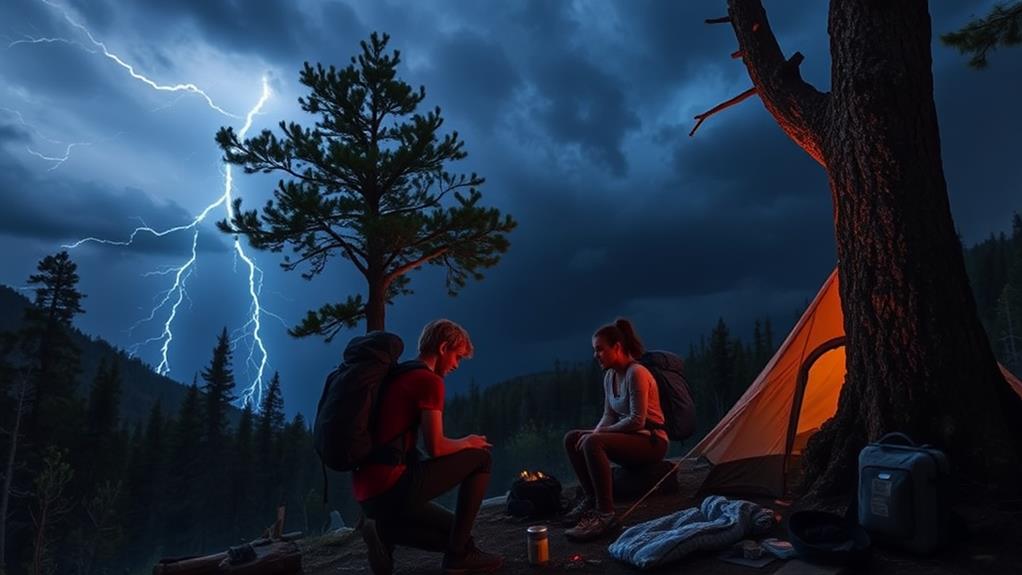
Knowledge is power, especially when it comes to first aid in the wilderness. We’ve learned the hard way that being prepared can mean the difference between life and death. That’s why we always:
- Pack a well-stocked first aid kit with burn treatments and bandages
- Practice CPR and the R.I.C.E. method for sprains
- Learn to recognize signs of hypothermia and heat exposure
Recommended Products

Coast Guard Approved First Aid Kit: Coast Guard Approval #160.041/23/0 ensures this marine first aid kit meets rigorous maritime safety standards
Frequently Asked Questions
How to Stay Safe Camping in a Thunderstorm?
We’ve got to be prepared when camping in thunderstorms. Let’s stay aware of our surroundings, seek shelter in a vehicle or dense forest, and avoid open areas. We’ll keep our gear dry and our spirits high, embracing nature’s wild side.
What to Do in a Lightning Storm in the Woods?
When caught in a lightning storm in the woods, we’ll seek dense forest for shelter. Let’s crouch low, minimize ground contact, and avoid tall trees. We’ll stay clear of water and wait it out. Lightning safety and storm preparedness are essential!
What Are 5 Things to Do to Stay Safe During a Thunderstorm?
Let’s get our thunderstorm preparation on point. We’ll seek sturdy shelter, count seconds between lightning and thunder, avoid exposed areas, stay low and spread out, and keep our camping gear and communication devices ready. Freedom’s about being prepared!
How to Ground a Tent From Lightning?
We can’t truly ground a tent from lightning. Instead, let’s focus on safer options. Tent materials don’t protect us, and DIY lightning rods are risky. We’re better off seeking solid shelter or using a vehicle during storms. Stay free, stay alive!


