⚠️ Disclosure: This post contains Amazon affiliate links. We may earn a commission at no extra cost to you.
We’ve all heard stories of camping trips gone wrong due to unexpected wildlife encounters. It’s a thrilling yet intimidating aspect of outdoor adventures that we can’t ignore. But what if we told you that with the right knowledge and practices, we can greatly reduce the risk of these potentially dangerous situations? From understanding animal behavior to mastering food storage techniques, there’s a wealth of information that can transform our camping experiences. Let’s explore how we can enjoy the great outdoors while keeping both ourselves and wildlife safe. The secrets to a harmonious coexistence with nature await.

Key Takeaways
- Store food and scented items at least 200 feet from sleeping areas to minimize attractants.
- Use bear-resistant containers or proper hanging techniques for food storage in wildlife-prone areas.
- Maintain a clean campsite by properly disposing of trash and washing dishes thoroughly.
- Make noise while hiking and camping to alert wildlife of your presence and avoid surprise encounters.
- Keep a safe distance of at least 75 feet from wildlife and never feed wild animals.
Understanding Common Wildlife Behavior
How well do you know the creatures that share your campsite? We’ve all heard tales of wildlife encounters gone wrong, but here’s the thing: most animals are just as wary of us as we are of them! Understanding common wildlife behavior is key to staying safe in the great outdoors.
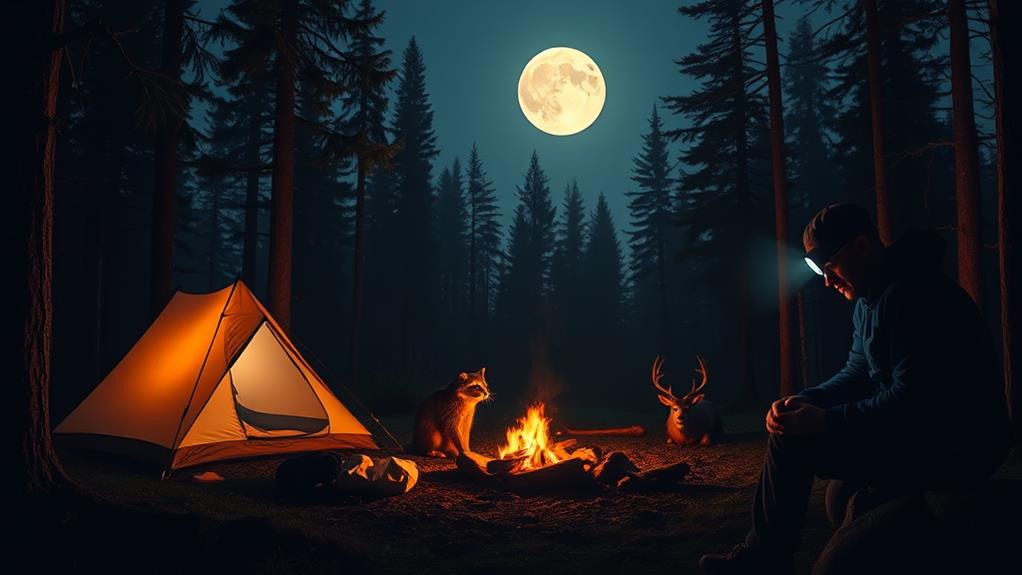
Take raccoons, for instance. These clever critters are nocturnal scavengers, always on the lookout for an easy meal. That’s why proper food storage is essential. And deer? They’re usually shy, but during mating season, they can get a bit feisty. Remember, wildlife safety isn’t just about protecting ourselves—it’s about respecting our furry neighbors, too.
Bears might seem scary, but they’re typically more interested in your snacks than you. By making noise and keeping our campsites clean, we can avoid most wildlife encounters and enjoy nature responsibly.
Proper Food Storage Techniques
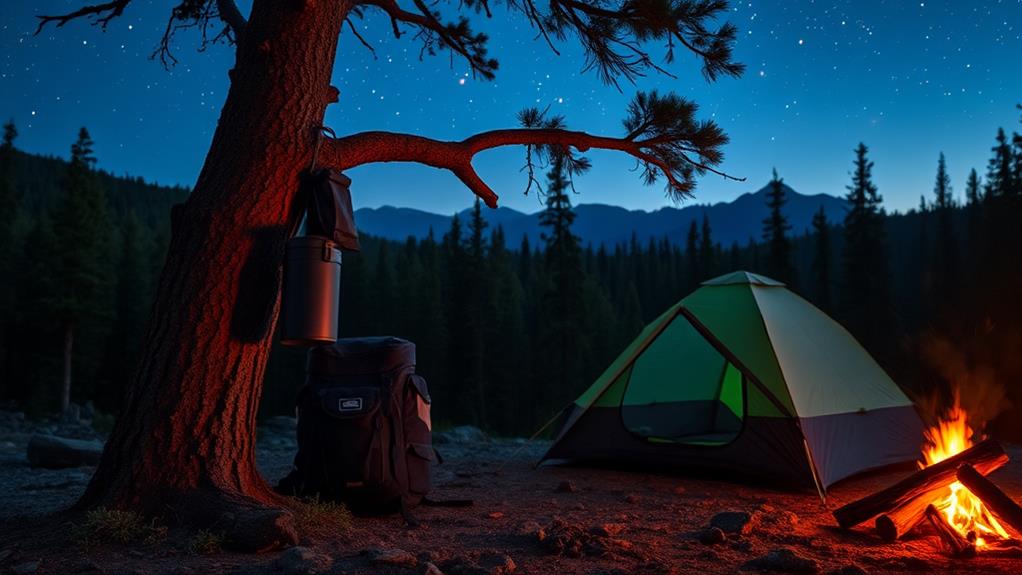
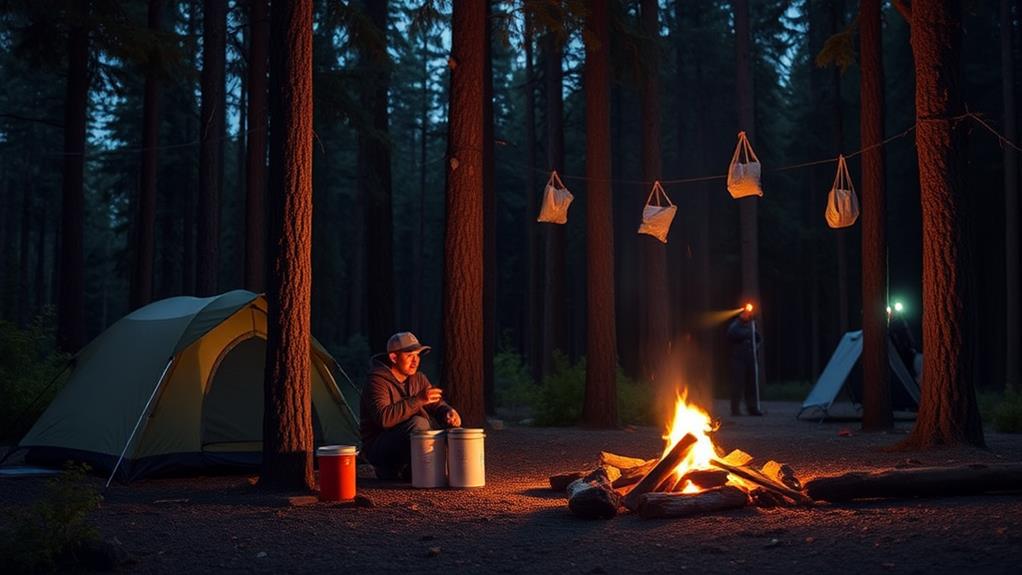
The key to keeping wildlife away from your campsite lies in proper food storage. We’ve all heard those campfire stories about bears raiding tents, right? Well, let’s make sure that doesn’t happen to us! Proper food storage techniques are essential for our outdoor adventures. First things first: invest in bear-resistant containers or use hard-sided vehicles to store your grub. If you’re hanging food bags, remember the 10-4 rule: 10 feet high and 4 feet from the trunk. Trust us, it’s a game-changer! Want to eliminate odors and avoid negative encounters? Keep your cooking area far from where you sleep – 200 feet should do the trick. And don’t forget about those sneaky-smelling toiletries! Pack them up tight in airtight containers. By following these tips, we’ll keep our campsites safe and wildlife-free.
Recommended Products

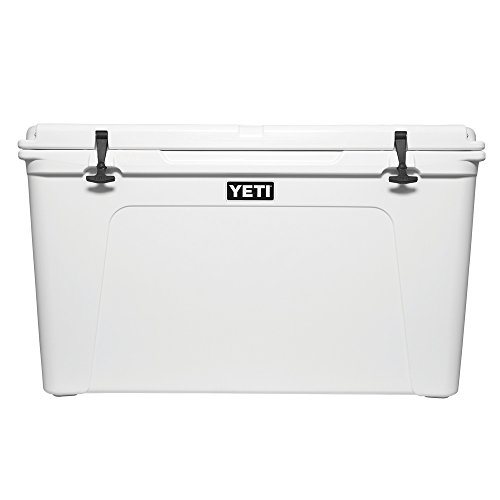
The YETI Tundra 210 is our deepest outdoor cooler, lets you haul a mighty load of food or drinks without taking up too much space
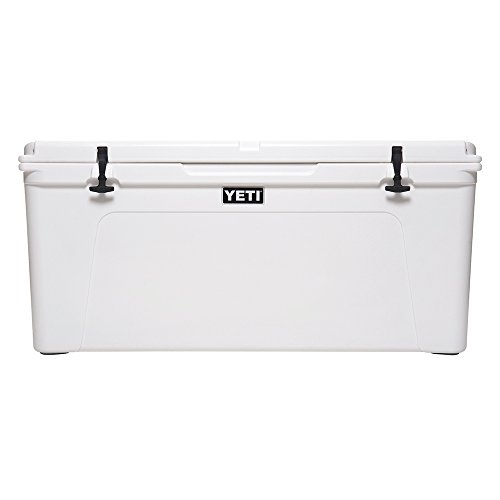
The YETI Tundra 160 is designed for those guys and gals who are in the field or on a boat season after season, for whom ordinary coolers just won’t cut it. Durable? You bet.
Creating a Wildlife-Safe Campsite
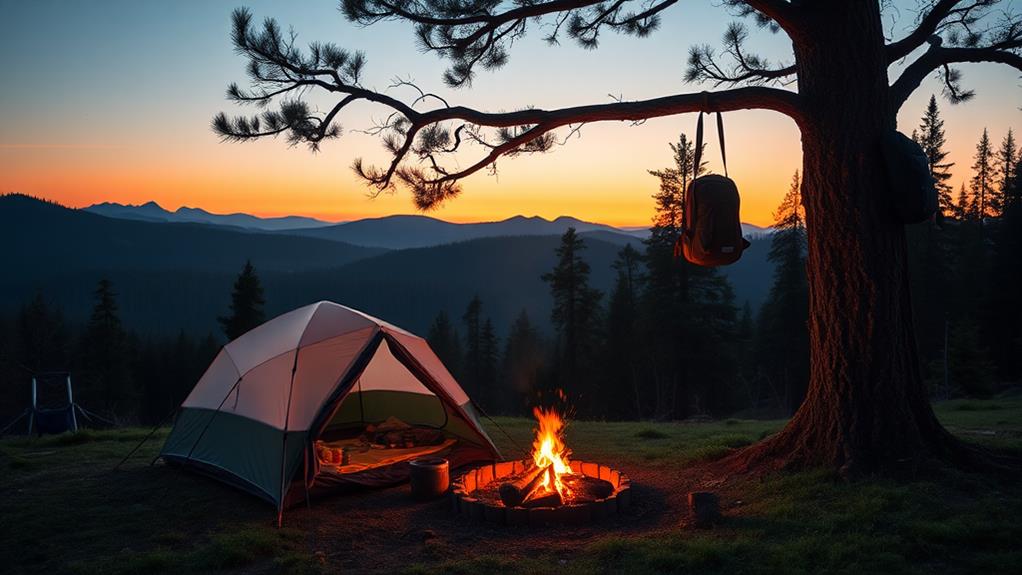
Let’s explore creating a wildlife-safe campsite, shall we? When we’re out in nature, it’s essential to remember that we’re guests in the animals’ home. To keep both us and the critters safe, we’ve got to be smart about our Camping Safety practices. First things first, let’s talk food. We need to store all our grub and anything scented at least 200 feet from our tents. Trust me, you don’t want a curious bear sniffing around your sleeping bag! Keep that campsite clean, folks. Scrub those pots and pans, and toss trash in bear-proof bins. Oh, and here’s a pro tip: use airtight bags for your cooking clothes. We once had a raccoon try to make off with our BBQ-scented shirts! By following these steps, we’ll create a safer space for both us and our wild neighbors.
Recommended Products

【78" H x 26" D x 55" W Garage Shelvin】Never store on the floor again! REIBII garage storage shelves offer a large storage space with 55" W x 26" D x 78" H dimensions. This extra-wide metal storage shelf means you can finally put everything in one place: big tires, toolboxes, paint buckets and bulky equipment. Say goodbye to the messy garage.

HAZARDOUS MATERIAL HANDLING: This open-head plastic drum helps safely contain hazardous materials for spill response, waste handling, storage, and transportation across professional environments
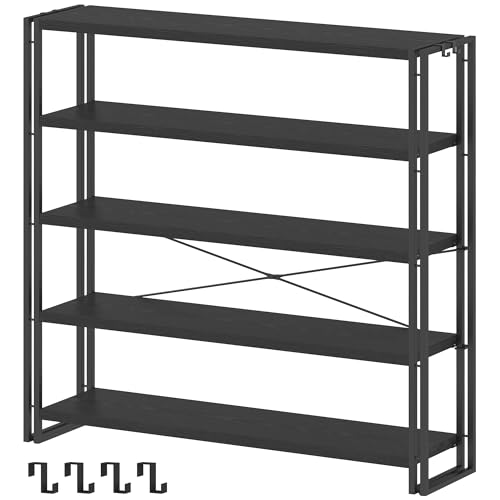
Easy Assembly: With its Scandinavian style, this shelf complements all your other furniture and is easy to assemble, taking only 10 minutes.
Essential Safety Gear
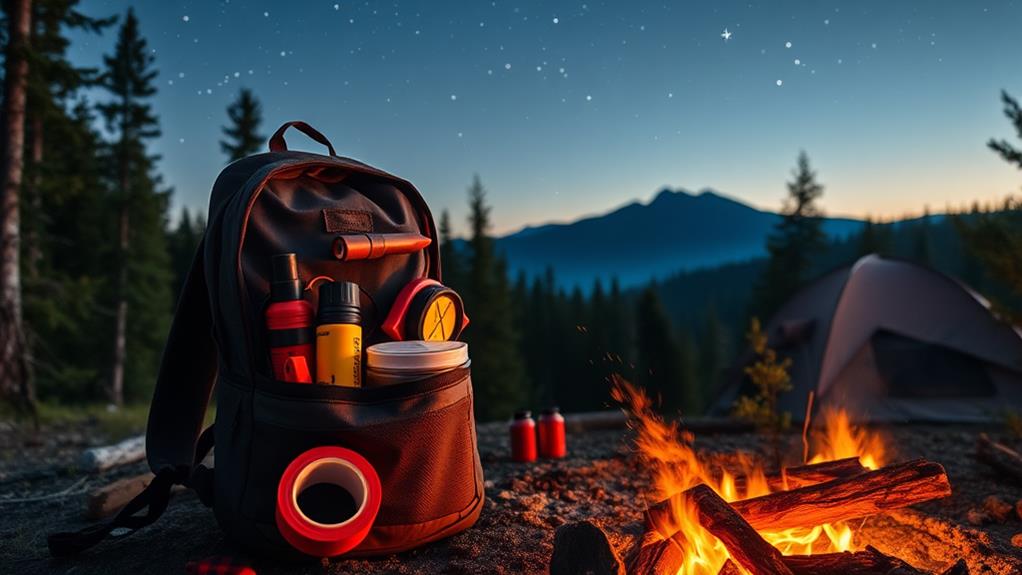
Packing the right safety gear can make or break your camping experience. We’ve learned the hard way that being prepared is key to avoiding wildlife encounters. Here’s what we always bring:
- Bear spray: It’s our go-to for peace of mind in bear country.
- Flashlight or headlamp: Essential for nighttime navigation.
- First aid kit: Because accidents happen, even in the wilderness.
Don’t forget noise-makers like bear bells or whistles. They’re great for announcing our presence and keeping wildlife at bay. And if you’re bringing Fido along, a spiral stake is a must-have to keep him from wandering off and potentially attracting unwanted attention.
Recommended Products
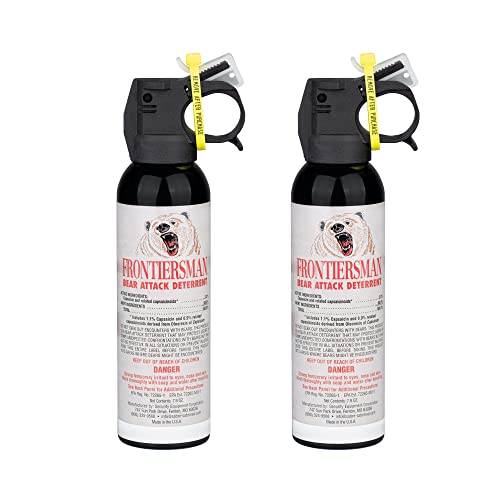
MAXIMUM STOPPING POWER: Strongest formula allowed by law (EPA Requires range of 1.0-2.0% Major Capsaicinoids), Frontiersman bear spray, made with 2.0% Major Capsaicinoids, is backed by our industry exclusive in-house HPLC lab, guaranteeing maximum strength in each canister

MAXIMUM STOPPING POWER: Strongest formula allowed by law (EPA Requires range of 1.0-2.0% Major Capsaicinoids, or MC), Frontiersman bear spray, made with 2.0% MC, is backed by our industry exclusive in-house HPLC lab, guaranteeing maximum strength

MAXIMUM STOPPING POWER: Strongest formula allowed by law (EPA Requires range of 1.0-2.0% Major Capsaicinoids), Frontiersman bear spray, made with 2.0% Major Capsaicinoids, is backed by our industry exclusive in-house HPLC lab, guaranteeing maximum strength in each canister
Noise Management for Wildlife Deterrence
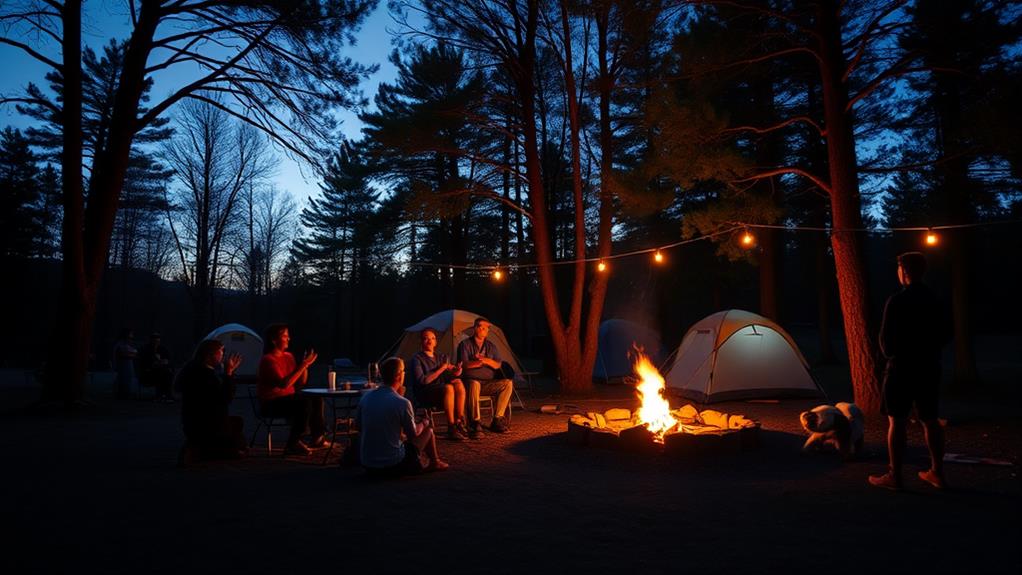
Noise-making strategies can be your best friend when it comes to wildlife deterrence while camping. We’ve found that a little noise goes a long way in keeping curious critters at bay. Remember those times we were startled by an aggressive animal? Well, let’s avoid that! By practicing smart noise management, we can minimize animal encounters without disturbing fellow campers. Clap your hands, chat with your buddies, or use a bear bell while hiking. It’s like sending out a friendly “heads up” to the wildlife. And hey, who doesn’t love a good campfire? That crackling sound isn’t just cozy; it’s nature’s own “no vacancy” sign for animals. But let’s not go overboard – we’re aiming for deterrence, not a full-blown concert. Stick to the leave no trace principle and keep it moderate.
Responding to Animal Encounters
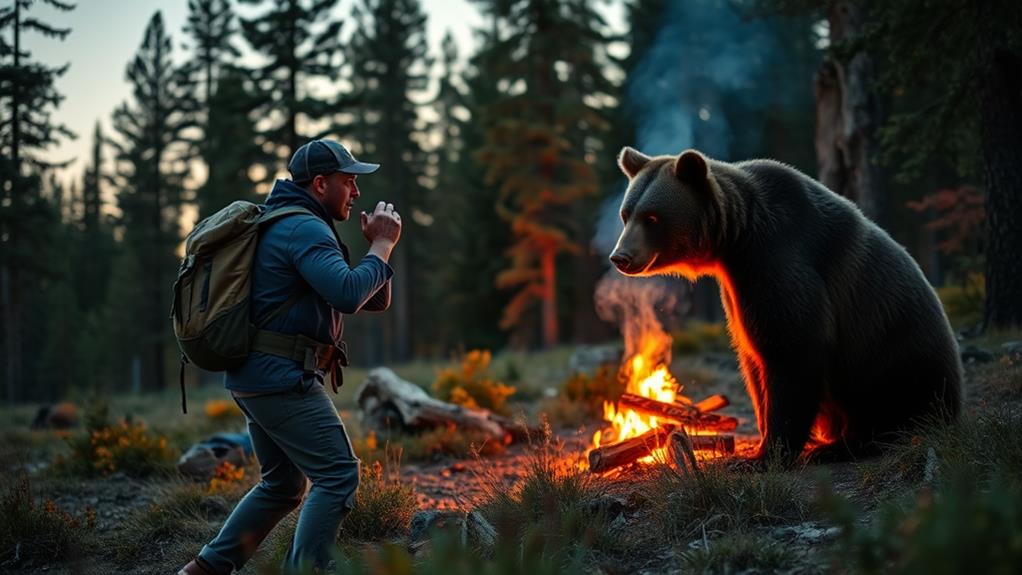
While noise management can help prevent animal encounters, we sometimes find ourselves face-to-face with wildlife. When that happens, it’s essential to know how to respond safely. Remember, wild animals can be potentially dangerous, so let’s make sure we’re prepared:
- Keep your distance: Stay at least 75 feet away from any animal you spot.
- Make yourself look bigger: If a raccoon or deer approaches, stand tall and wave your arms.
- Back away slowly: For bears, remain calm and move away while making noise.
We’ve all heard stories of campers getting too close to wildlife, but trust us, it’s not worth the risk. By respecting animals’ space and avoiding feeding them, we’re not only keeping ourselves safe but also preserving their natural instincts. So, next time you’re out camping, remember: observe from afar and let nature be wild!
Recommended Products
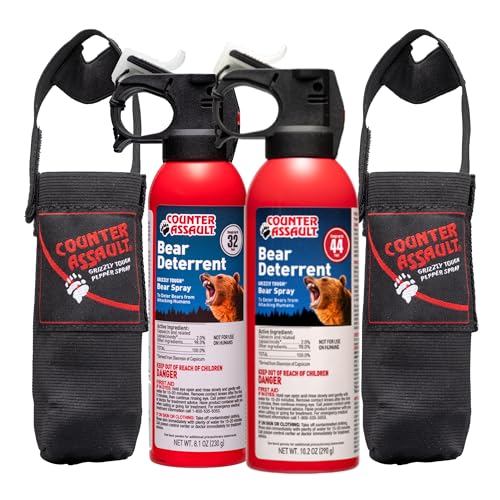
Unmatched Bear Spray: The 8.1 bear attack prevention canister offers a 32-foot spray range and 7-second duration while the 10.2 canister covers 44 feet with a 10-second spray

Unmatched Bear Spray: This pepper spray for hiking offers a 32-foot spray range and 7-second duration, ensuring you're prepared for a variety of wildlife encounters, including coyotes, mountain lions, and large cats

【Motion Activated Protection】: Equipped with advanced PIR motion sensor technology, this ultrasonic animal repeller outdoor automatically detects animal movement and activates instantly. It emits 18–45 kHz ultrasonic waves combined with flashing strobe lights, effectively deterring deer, cats, raccoons, coyotes and more—keeping your yard peaceful without harmful methods.
Campsite Cleanliness Best Practices
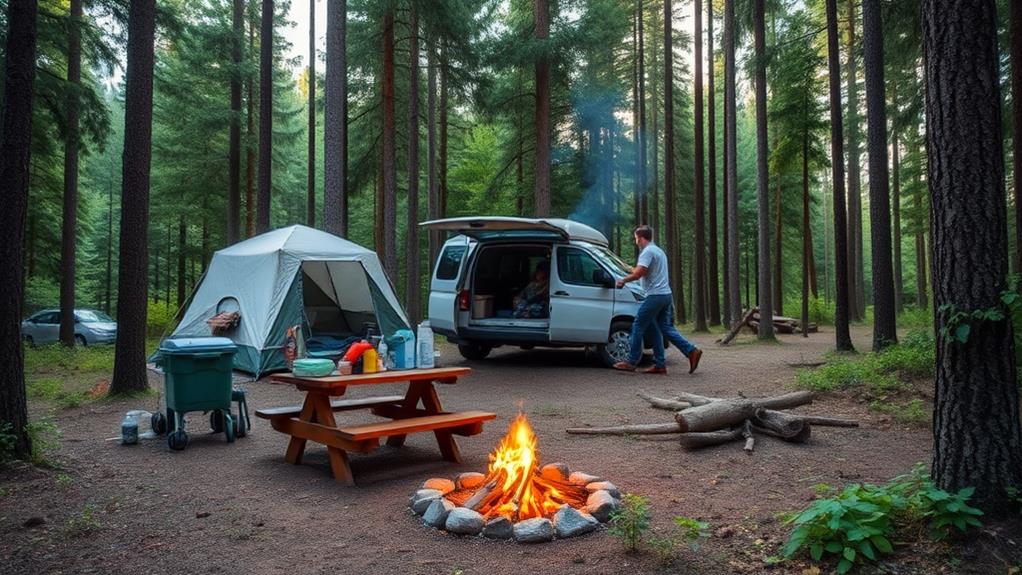
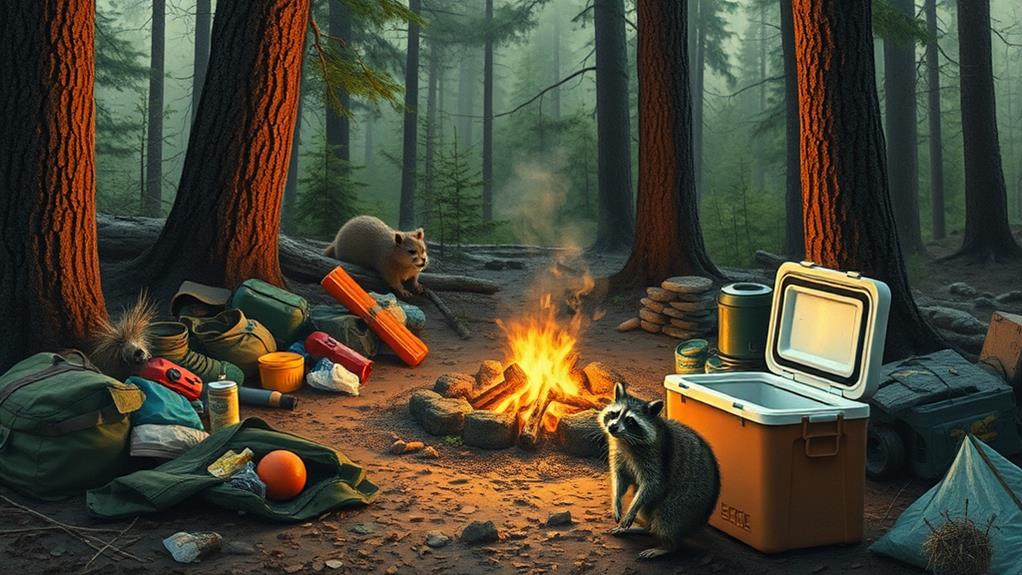
Maintaining a clean campsite isn’t just about aesthetics; it’s essential for your safety and the well-being of local wildlife. We’ve learned the hard way that a messy camp can attract unwanted visitors! To keep critters at bay, we always scrub our pots and pans thoroughly and store cooking clothes in airtight bags. It’s amazing how even the tiniest food scrap can lure a curious bear or raccoon.
Speaking of bears, have you invested in bear-proof coolers yet? They’re a game-changer for food storage:
| Item | Regular Cooler | Bear-Proof Cooler |
|---|---|---|
| Security | Low | High |
| Durability | Moderate | Excellent |
| Peace of Mind | Minimal | Maximum |
Recommended Products

The Haul is the first-ever YETI cooler on wheels. Perfect for taking the Tundra's legendary toughness and unmatched insulation power the extra mile

Rotomolded: Our coolers are made from rotationally-molded LLDPE plastic and are designed to achieve even wall thicknesses for optimal durability

The YETI Tundra 65 is just as adept at keeping your catches cold in the field as it is storing the drinks and food for your backyard barbecue, this ice chest is plenty roomy, holding a limit of redfish or your prized brisket
Pre-Trip Research and Preparation
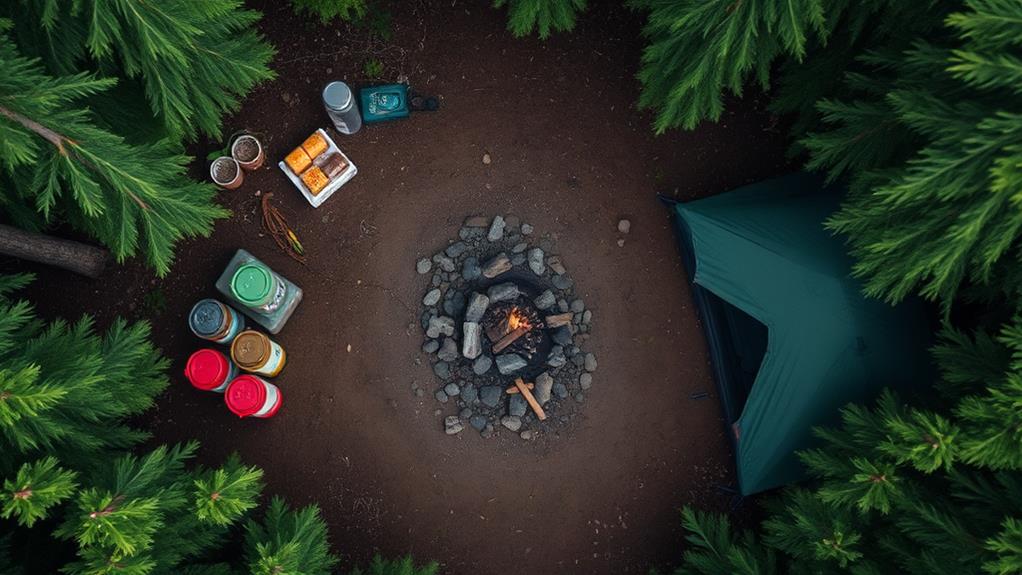
Before we even think about packing our gear, we’ve learned that thorough pre-trip research is essential for a safe camping experience. We always make sure to:
- Study the local wildlife and their behaviors
- Check with park rangers for the latest safety info
- Brush up on proper food storage techniques
These steps help us avoid unexpected wildlife encounters and keep our campsite critter-free. Remember, freedom in the great outdoors comes with responsibility! We’ve had our fair share of close calls, like the time we accidentally left a granola bar wrapper in our tent. Let’s just say, raccoons can be persistent! Now, we’re all about those bear-resistant containers and following park regulations. It’s not just about protecting ourselves; it’s about respecting the wildlife and their habitat. So, are you ready to become a wildlife-savvy camper?
Frequently Asked Questions
How to Avoid Wildlife Encounters?
Let’s stay wild and free while keeping our distance from furry neighbors! We’ll boost our wildlife awareness, choose campsites wisely, stash our grub smart, and make some noise. It’s all about coexisting in nature’s playground.
How Do You Protect Animals While Camping?
Like guardians of the wild, we protect animals while camping through wildlife conservation and ethical camping practices. We’ll respect their space, store food securely, and follow camping etiquette. Let’s embrace freedom responsibly, preserving nature’s delicate balance and animal behavior.
How Do You Stay Safe From Other People While Camping?
We’ll stay safe by choosing secure campgrounds, staying alert to strangers, and trusting our instincts. Let’s keep our site well-lit, lock up valuables, and be prepared for emergencies. Connecting with fellow campers can enhance our personal safety too.
How to Protect Yourself From Wild Animals in the Wilderness?
Let’s embrace wildlife awareness and bear safety in the wild. We’ll practice proper food storage, follow trail etiquette, and stay vigilant. By respecting nature’s creatures and their space, we’re free to enjoy the wilderness without unnecessary risks.