⚠️ Disclosure: This post contains Amazon affiliate links. We may earn a commission at no extra cost to you.
Like Prometheus gifting fire to humanity, you’re about to initiate a journey that’ll transform your outdoor experience. Building and maintaining a safe campfire isn’t just about creating warmth or a cozy atmosphere—it’s a fundamental skill that can make or break your wilderness adventure. Whether you’re planning your first overnight camping trip or looking to refine your outdoor expertise, these essential campfire tips will help you avoid common rookie mistakes and guarantee your safety. There’s more to mastering the flames than just striking a match, and what you don’t know could put your entire expedition at risk.

Key Takeaways
- Always build fires in designated fire rings and maintain a 10-foot clearance from tents and flammable materials.
- Check local fire regulations and obtain necessary permits before starting any campfire to avoid fines.
- Gather three sizes of wood: pencil-thin twigs, finger-width sticks, and wrist-thick logs for a successful fire.
- Keep a bucket of water nearby and never leave fires unattended, as 84% of wildfires are caused by humans.
- Monitor wind conditions and avoid making fires when speeds exceed 10 mph or humidity drops below 30%.
Choose Your Fire Ring Location
When setting up your first campfire, selecting the right fire ring location is essential for both safety and environmental protection. Let’s be real – nobody wants to be that person who starts a forest fire. Your first move? Look for a designated fire ring at your campsite. Trust me, they’re there for a reason.
No existing fire ring? Choose your site carefully. Here’s what you need to know:
- Keep it 10 feet away from your tent (seriously, who wants to wake up on fire?)
- Avoid overhanging branches – they’re not exactly fireproof
- Find level ground – rolling fireballs aren’t fun
- Clear away all flammable materials within a 10-foot radius
Listen up: you’ll need to rake the area around your fire ring. It’s not exciting work, but it’s vital. Dead leaves, twigs, and that random garbage left by previous campers? Gone. All of it. Your safe spot needs to be clean and clear.
Remember – if you’re in the backcountry, check with rangers first. You can’t just plop down a fire ring wherever you want. That’s not how this works. That’s not how any of this works.
Gather Essential Fire Materials
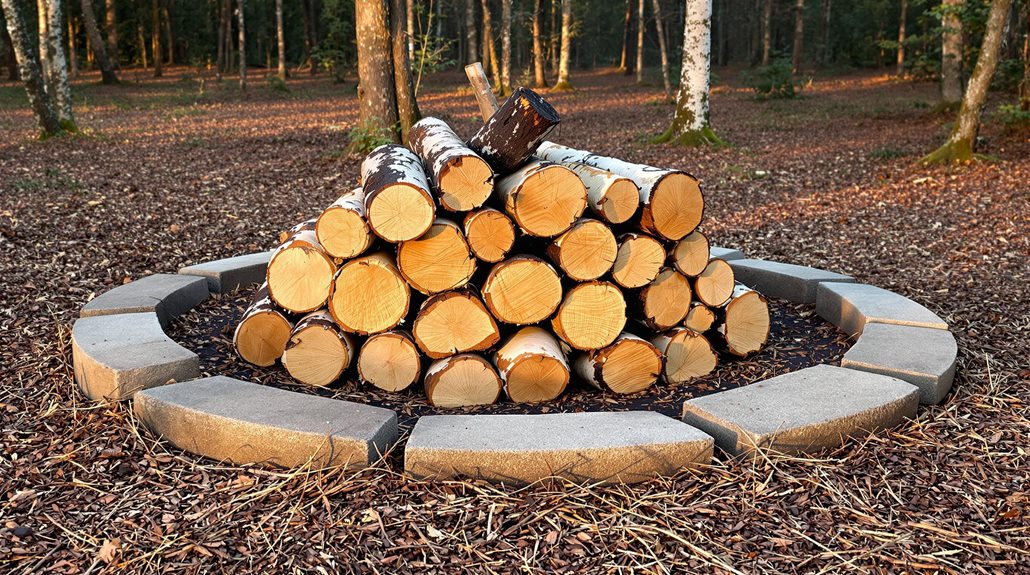
Starting with dry tinder like leaves and pine needles is absolutely essential – trust me, you don’t want to waste time with damp materials when you’re hungry and cold. You’ll need to gather three sizes of wood: pencil-thin twigs for kindling, finger-width sticks for your initial fuel, and wrist-thick logs for keeping that fire going strong. Stack everything within arm’s reach of your fire ring, keeping your materials organized by size, because there’s nothing worse than scrambling around in the dark for more wood when your fire starts dying down.
Recommended Products

MADE IN AMERICA. The Quad Pak can secure your home, work and automobile. Most people spend 95% of their time in these three locations. In an emergency a Fire Starter will always be close at hand.

PATENTED MILITARY GRADE DURABILITY – SurvivorCord is not cheap and for good reason. It is the original patented paracord, protected by US Patent 9,528,204. Designed in collaboration with Special Forces in Afghanistan, Designed to outperform, our MIL-STYLE paracord 550 exceeds MIL-SPEC requirements with a tensile capacity of 620 LB and three integrated survival strands. This strong military-grade parachute cord is perfect for survival, camping, & outdoor adventures.
Find Dry Tinder First
The heart of any successful campfire beats in the tinder you collect. Let’s be honest – without proper tinder, you’re just someone staring at sticks in the woods. Not exactly the outdoor adventure you were hoping for, right?
Here’s what you’re looking for:
- Dry grass (bone dry, not that dewy morning stuff)
- Crispy leaves
- Pine needles that snap when bent
- Birch bark, nature’s gift to fire starters
- Dead twigs smaller than a pencil lead
You’ll want to gather about a handful of these easily ignitable materials. Trust me, more is better – there’s nothing worse than running out of tinder mid-fire-starting. And please, for the love of camping, don’t use wet materials. Seriously. Wet tinder is as useful as a chocolate teapot.
While dryer lint from home works great, try to stick with local materials you find at your campsite. It’s better for the environment, and you’ll look like you actually know what you’re doing. Just remember: gather only what you need, and check local regulations first. No one likes that camper who strips the forest bare.
Choose Right Wood Size
You’re about to face the most essential part of fire-building: selecting the right wood sizes. Trust me, this isn’t rocket science, but you’d be amazed how many people get it wrong. Let’s make sure you’re not one of them.
Here’s what you need to choose:
- Tinder: The tiny stuff that catches fire instantly
- Kindling: Small twigs and sticks for building up heat
- Firewood: The main event – your primary fuel source
When gathering firewood, here’s your golden rule: nothing thicker than your wrist. Seriously. Those massive logs might look impressive, but they’re just going to sit there like stubborn rocks. Instead, pick branches between 1-5 inches thick. They’re perfect.
And please, for the love of camping, make sure everything’s dry! Wet wood is useless wood. Period. Don’t be that person who tries to burn soggy branches and creates a smoke signal visible from space.
Remember to gather your wood locally – no bringing firewood from home. It’s not just good camping etiquette; it’s essential for preventing pest spread. And leave those living trees alone. Dead, seasoned wood is what you want. Always.
Stack Materials Nearby
Before striking that first match, get organized by stacking all your fire materials within arm’s reach of your pit. Trust me, there’s nothing worse than frantically searching for more kindling while your carefully built fire fizzles out. Been there, done that – not fun.
Here’s what you’ll need to gather and arrange nearby:
- Tinder: Create a generous pile (about a foot wide) of dry leaves and pine needles
- Kindling: Stack those pencil-sized twigs in varying thicknesses
- Firewood: Keep those wrist-thick logs ready to go
Look, building a campfire isn’t rocket science, but you’ve got to be smart about it. Keep your materials sorted in separate piles – it’s a total game-changer when you’re maintaining your fire throughout the night. No one wants to stumble around in the dark looking for more wood.
Remember: Your tinder pile should be closest to the pit, followed by kindling, then firewood. This arrangement isn’t just for show – it’s practical fire management 101. And please, don’t be that person who has to borrow materials from other campers. Nobody likes a unprepared camper.
Master Fire Building Methods
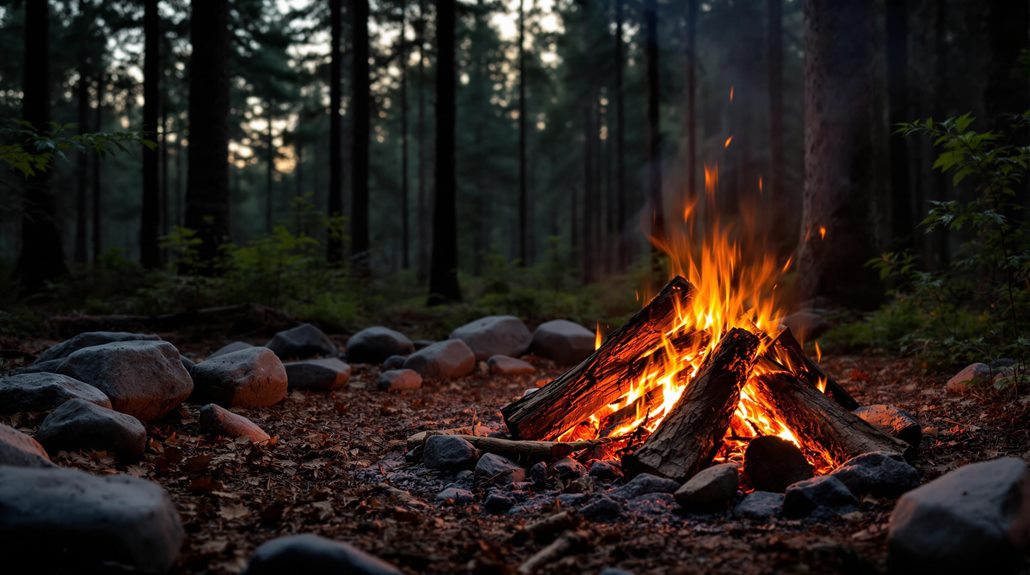
Building a successful campfire relies on mastering three fundamental methods: the tepee, log cabin, and platform structures. Each fire building technique serves a different purpose – get this right, and you’re golden.
Let’s be real – it all starts with tinder. Grab enough to make a pile about a foot wide. Skimping here? Big mistake. Your fire’s basically dead before it starts. Once you’ve got your tinder base, it’s time for kindling. Stack those skinny twigs like your life depends on it, because, well, it kind of does when you’re freezing in the wilderness.
Here’s what makes or breaks your fire:
- Dry wood only – wet logs are useless
- Keep those larger logs spaced out for oxygen flow
- Hardwoods burn longer (thank you, oak!)
- Softwoods? They’re gone in a flash
Remember these campfire tips: your fire needs to breathe. Think of it like a crowded campsite – nobody likes being squished together. Space those logs apart, let the air flow, and watch your successful fire roar to life. Trust me, once you’ve got these methods down, you’ll never struggle with a sad, smoky mess again.
Recommended Products

FAST RELIABLE LIGHTING NO LIGHTER FLUID NEEDED: Fire starter rolls help light charcoal and firewood quickly without lighter fluid, delivering a reliable, steady flame for grilling and outdoor fires with less time spent on ignition.

ONE PULL STARTS FIRE: Pull the string and a wax fire starter brick ignites in seconds with no matches, lighter, or kindling required. Works on campfire wood, fire pit rings, fireplace logs, bonfire stacks, and charcoal grill setups. Designed for camping trips, hunting packs, and backyard fire pit grill builds with wet or dry wood stacked any way.
Keep Water Sources Nearby
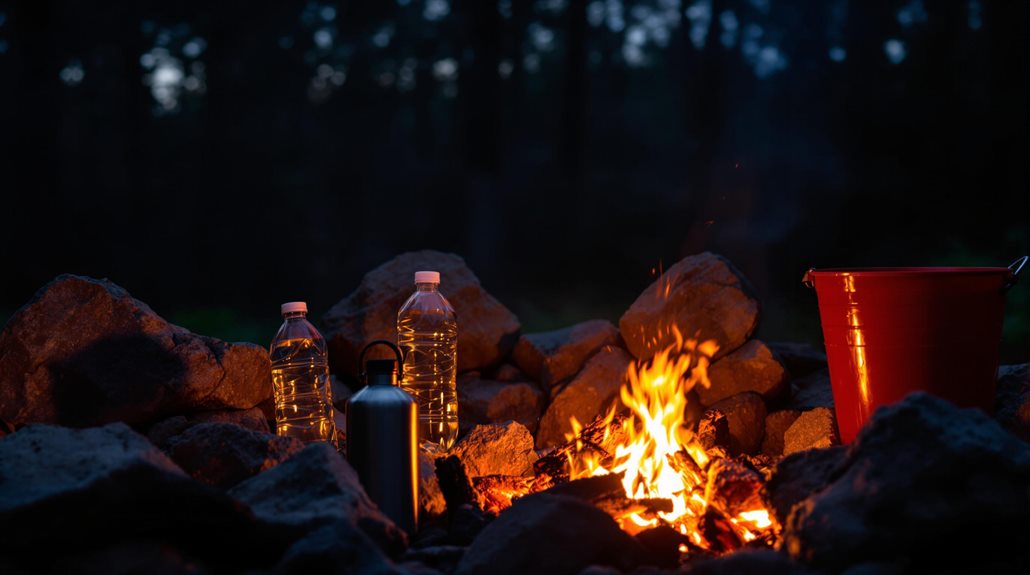
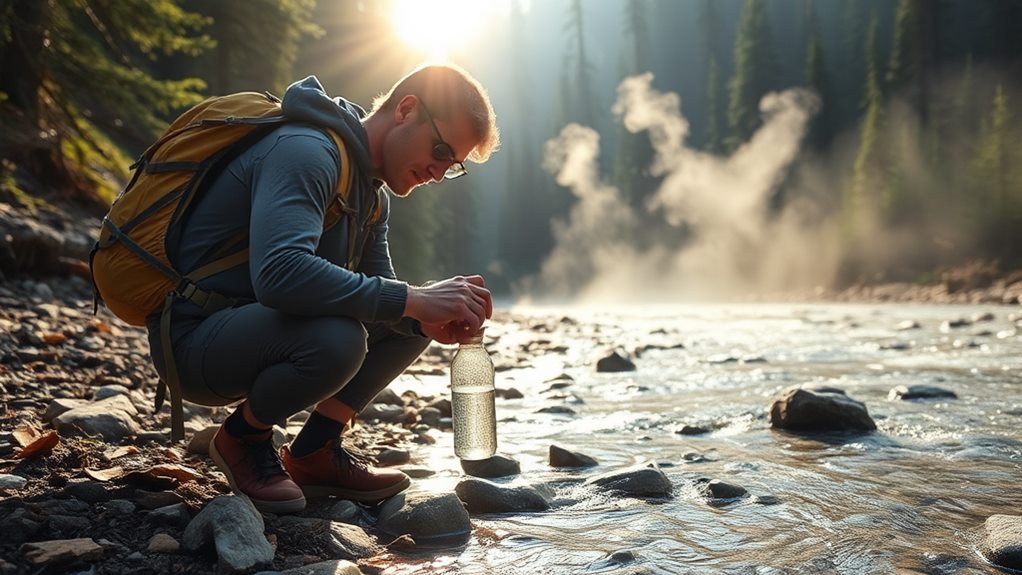
When it comes to campfire safety, you’ll want a water source within arm’s reach – seriously, don’t mess around with this one. Your best bet is setting up near a tested water access point, keeping filled buckets ready, and maintaining a clear path between your fire pit and water supply. For quick emergency response, you’ll need at least a gallon per person, plus extra containers stationed at strategic spots around your campsite – trust me, you don’t want to be that person running around with a tiny water bottle when sparks start flying.
Safety First: Access Points
A campfire’s worst enemy is an uncontrolled flame, and your best defense is having water readily available. Let’s be real – safety first isn’t just a catchy phrase, it’s what keeps you from becoming tomorrow’s cautionary tale. When setting up your campsite, those access points to water aren’t optional – they’re absolutely essential.
Here’s what you need to know about managing your nearby water source:
- Choose a spot within 100 feet of water (but not too close – nobody wants their tent floating away)
- Keep a filled bucket ready – because running back and forth to the creek when things go wrong isn’t exactly ideal
- Scout multiple emergency water sources – your primary one might dry up
- Know your fire management options, especially during dry seasons
Look, you’re not just camping – you’re responsible for every spark that flies from your fire. That means knowing exactly how to extinguish a fire quickly and having the means to do it. Trust me, nothing ruins a camping trip faster than watching your campfire spread where it shouldn’t. Your fire safety needs aren’t suggestions – they’re non-negotiable survival tools.
Managing Water Supply Distance
Smart water management starts with strategic placement of your camp. Let’s be real – nobody wants to trek half a mile for water when they’re trying to manage a campfire. That’s just asking for trouble. Keep your campsite within 100 yards of your water source. Period.
Here’s why water proximity matters:
- You’ll need quick access when managing your fire
- Cooking becomes way less of a hassle
- Emergency situations require immediate water access
- Multiple trips for water won’t exhaust you
Listen up – before you even think about unpacking, scout your camping area and locate the nearest water source. Trust me, this five-minute task will save you hours of frustration later. Grab yourself a decent water container or one of those nifty collapsible bags – they’re literally lifesavers for transporting water back to camp.
And here’s a non-negotiable: Keep a bucket of water near your fire at all times. Not some tiny container – a proper bucket. Because when things go wrong with fire, they go wrong fast. Clean water sources are essential too – filter if you’re unsure. Better safe than sorry, right?
Emergency Response Resources
Beyond basic water management, emergency preparedness can make the difference between a minor incident and a full-blown disaster. Let’s face it – fires can be unpredictable, and you’d better be ready when things go wrong.
First things first: Always keep a bucket of water nearby. No excuses. It’s not just common sense – it’s part of standard fire safety guidelines that could save your behind. And don’t just wing it – establish a clear path to a water source before you even think about lighting that first match.
Here’s what you absolutely must have ready:
- Water bucket or sand container
- Shovel for emergency smothering
- Quick access to emergency services contacts
- Designated escape routes
When an unexpected flare-up happens (and trust me, they do), you’ll thank yourself for being prepared. Know how to handle a fire-related emergency before it happens. Teach everyone in your group the “Stop, Drop, and Roll” technique – it’s not just for grade school kids anymore.
Remember: Local regulations aren’t suggestions. They’re rules meant to keep you alive. Follow them, respect them, and most importantly, don’t be the camper who learns safety the hard way.
Check Local Fire Regulations
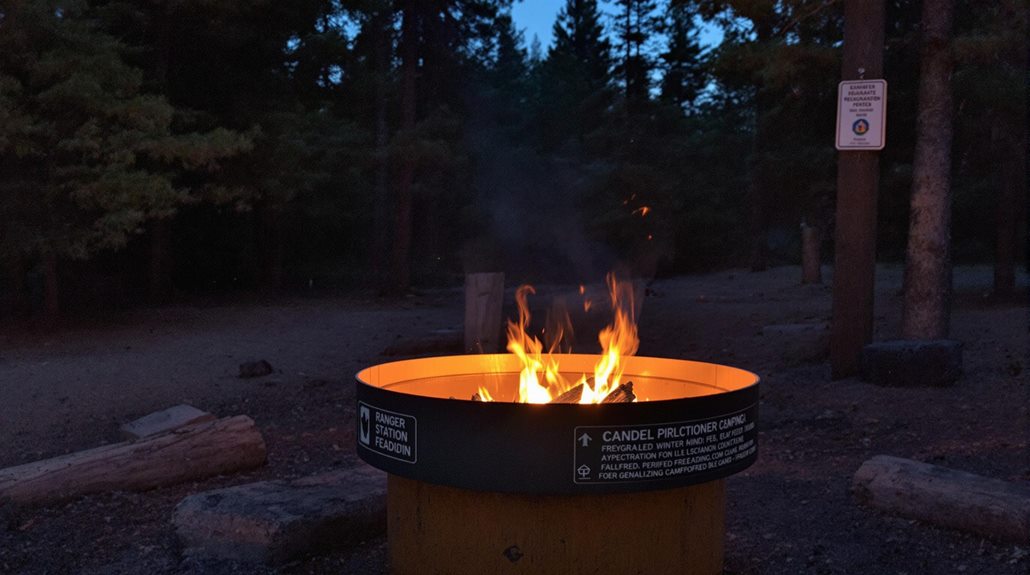
Taking the time to check local fire regulations isn’t just a suggestion – it’s an essential first step before building any campfire. Look, nobody wants to be that person who starts a wildfire because they couldn’t be bothered to follow the rules. Trust me, it’s not a good look.
Here’s what you absolutely must do:
- Contact the campground operator or local ranger station
- Ask about current fire restrictions and bans
- Check if you need a permit (seriously, don’t skip this)
- Confirm where you’re allowed to build fires
During dry seasons, fire regulations get super strict – and for good reason. You might find that open flames are completely banned, or you’ll be required to use only designated fire rings. Don’t even think about collecting random firewood until you’ve checked if it’s allowed.
Different areas have different rules. What’s okay at one campground might get you a hefty fine at another. And yeah, those backcountry sites? They often have their own special permits and restrictions. Being prepared isn’t optional – it’s your responsibility as an outdoor enthusiast. No excuses.
Maintain Safe Burning Practices
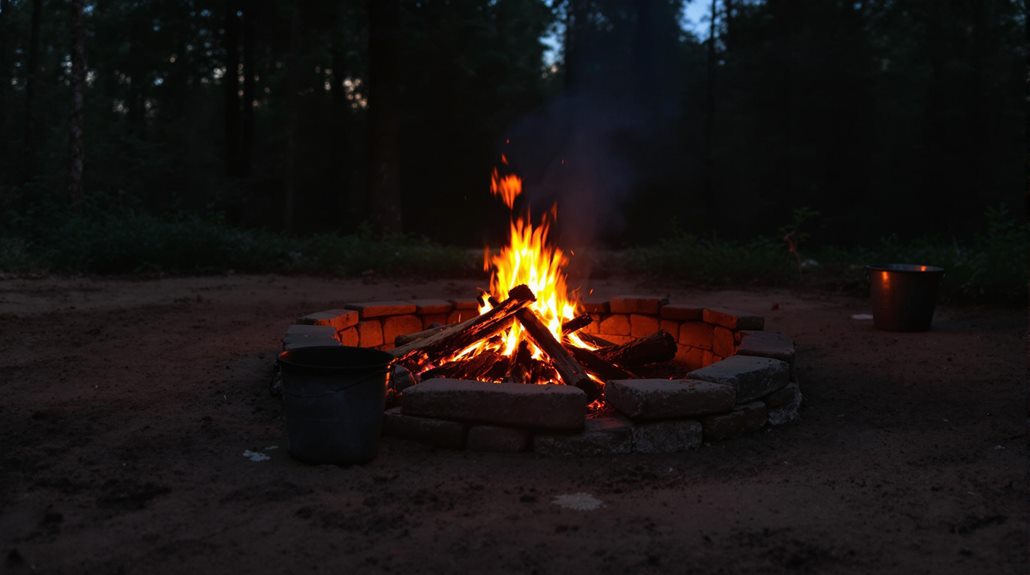
Your campfire needs to stay small and controlled – no towering infernos that’ll scorch the whole forest, folks. You’ll want to position yourself downwind of the smoke unless you enjoy teary eyes and smelling like a BBQ joint for days. Never, ever walk away from a burning fire (seriously, it’s both dangerous and just plain dumb), and keep water or sand within arm’s reach for quick action if needed.
Control Fire Size Always
Keeping a campfire under control means mastering the art of size management. Let’s face it – nobody wants to be that person who creates a towering inferno in the woods. Your fire size should be practical, not dramatic.
Here’s what you need to know about maintaining control:
- Start small with kindling (seriously, don’t get ahead of yourself)
- Add larger pieces gradually – patience is key here
- Keep your fire within the existing fire ring (it’s there for a reason)
- Check on it every 45 minutes – set a timer if you have to
Look, it’s pretty simple: your fire shouldn’t be taller than you can handle. A well-controlled fire means you’re using a mix of woods and building up slowly. And always – always – keep water nearby. Trust me, you’ll thank me later.
Remember the ten-foot rule: clear everything flammable within that radius. No exceptions. Think of it as your fire’s personal space bubble.
Bottom line? A controlled fire is a happy fire. Keep it contained, keep it manageable, and you’ll avoid becoming the cautionary tale at future camping trips.
Watch Wind Direction Carefully
The wind is your campfire’s unpredictable dance partner, and you’ve got to stay one step ahead. Before you even strike that first match, check which way the breeze is blowing. Trust me, it’s not just about keeping smoke out of your eyes (though nobody likes playing musical chairs around a smoky fire).
Here’s what you absolutely must do to watch wind direction properly:
- Position your fire pit downwind from your tent and anything else you’d rather not see catch fire
- Use natural windbreaks like big rocks or logs – they’re nature’s fire guards
- Keep that bucket of water handy – you never know when things might get dicey
Look, the wind can change directions faster than your camping buddy can tell their favorite ghost story. When it does, you need to be ready. Monitor wind changes throughout your fireside hangout. If gusts pick up or suddenly shift, don’t be a hero – adjust your fire or extinguish it completely. Fire hazards aren’t worth the risk, period.
Remember: Wind + Fire = Potential Disaster. Stay alert, stay safe, and maybe keep those marshmallow jokes on standby.
Never Leave Fires Unattended
Speaking of staying alert, constant supervision is the golden rule of campfire safety. Here’s a shocking fact – 84% of U.S. wildfires are caused by humans, and unattended fires are a major culprit. Seriously, never leave your fire without someone watching it. Period.
When you’re camping with friends, take turns being the “fire boss.” Here’s what that means:
- Always have someone monitor the fire, especially when adding wood
- Keep your fire going safely by having a responsible person stay behind if others leave
- Watch the surrounding area for any stray sparks or embers
Wind is your campfire’s sneaky enemy. Those seemingly innocent gusts can send sparks flying everywhere – and boom, you’ve got a disaster on your hands. So when the wind picks up, either put the fire out or stay extra vigilant.
Before hitting the sack or heading home, double-check that the fire is completely out. And I mean completely – cool to the touch. Don’t be that person who thinks “it’s probably fine” and walks away. Trust me, a half-dead campfire can come back to life when you least expect it.
Control Ember Spread
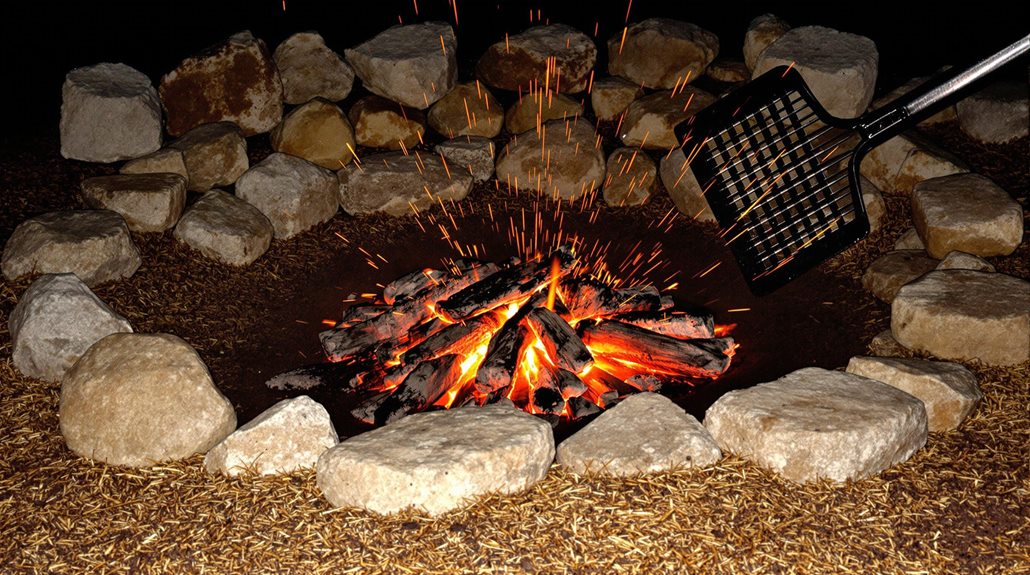
Safely containing flying embers is essential for preventing forest fires and maintaining a responsible campsite. Let’s face it – nobody wants to be that person who starts a forest fire because they couldn’t control their campfire’s ember spread. It’s actually pretty simple to keep those pesky sparks in check.
First things first – always build your fire in a designated fire ring. No exceptions. Period. Create a ten-foot clearing around your pit by raking away leaves, grass, and other flammable materials. Trust me, those tiny embers are just waiting to find something to ignite.
Here’s what else you need to do:
- Stack larger logs or rocks around your fire – they’re like bouncers keeping those wild embers in check
- Keep an eye on the wind direction – it’s not rocket science, just common sense
- Always have a bucket of water or sand nearby – because escaping embers don’t wait for you to run to the nearest stream
Monitor Weather Conditions
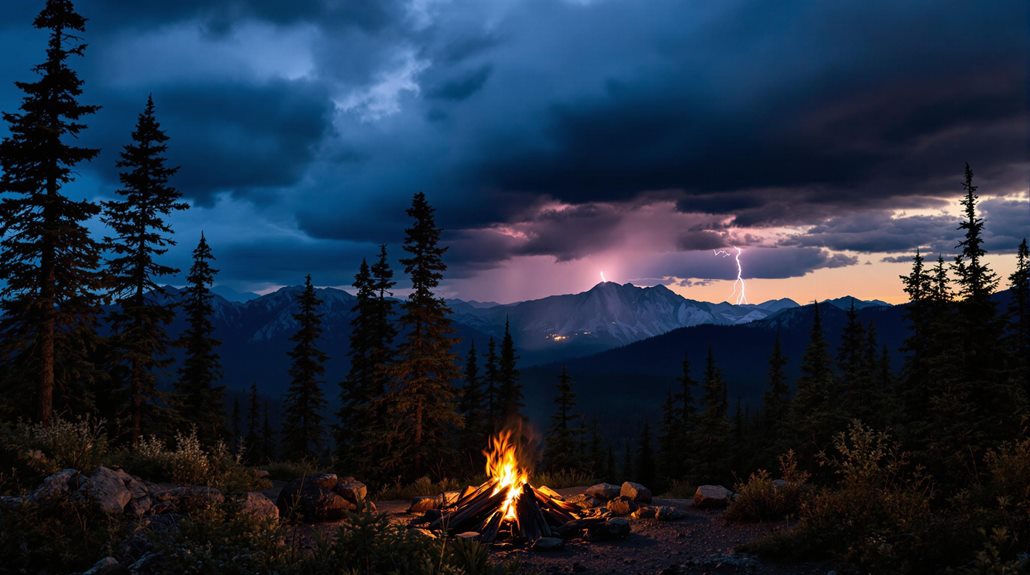
While controlling embers is important, Mother Nature ultimately calls the shots when it comes to campfire safety. Let’s face it – weather conditions can make or break your camping experience, and they’ll definitely impact your ability to safely maintain a campfire.
Here’s what you absolutely must monitor:
- Wind speed (seriously, anything above 10 mph is a no-go)
- Humidity levels (below 30%? Maybe skip that fire altogether)
- Rain forecasts (because nobody likes a soggy marshmallow)
You’d be amazed how many rookie campers skip checking the weather forecast. Big mistake. Huge. Weather patterns directly affect fire safety and can turn your cozy campfire into a wildfire faster than you can say “s’mores.” Trust me, you don’t want to be that person who ignored the local fire ban and ended up on the evening news.
Before you even think about striking that match, pull up your local weather app. Look for red flags like high winds or extremely dry conditions. And if there’s a fire restriction in place? Don’t even think about it. Mother Nature isn’t known for her forgiveness when it comes to fire safety violations.
Properly Extinguish Your Fire
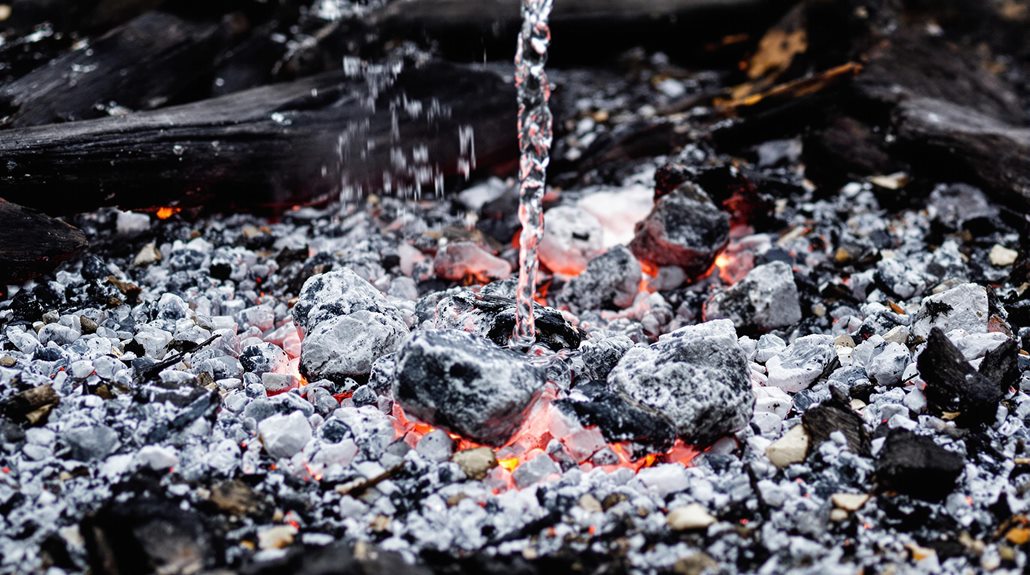
At the end of your camping adventure, properly extinguishing your fire is just as essential as building it. Let’s be real – nobody wants to be that person who starts a wildfire because they were too lazy to put out their campfire correctly. It’s simple: never, ever leave your fire unattended.
Here’s the right way to do it (and no, kicking dirt over hot coals doesn’t count):
- Slowly pour water over the ashes – and I mean SLOWLY
- Stir everything around with a stick or shovel
- Pour more water
- Stir again
- Repeat until everything’s cold
Don’t even think about using dirt or sand to extinguish the fire. Those materials actually insulate hot coals, which is exactly what you don’t want. Trust me, that’s how wildfires start.
When you’re done, the ashes in your fire rings should be white and completely out. Here’s the ultimate test: if you can’t touch the ashes with your bare hand, you’re not finished. Keep adding water and stirring until they’re cool to the touch. No exceptions.
Remember: if you’ve got time to camp, you’ve got time to extinguish properly.
Leave No Trace Behind
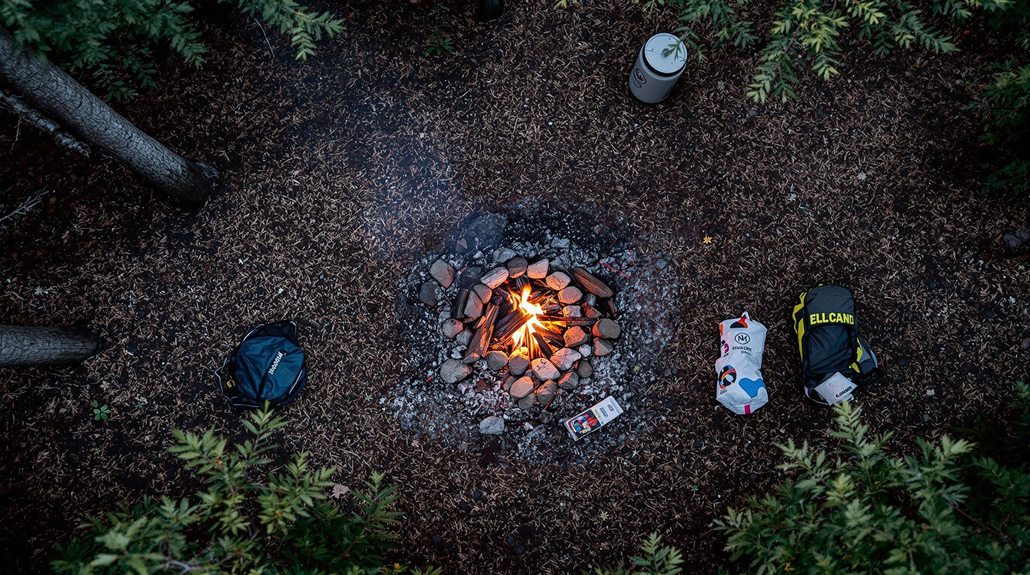
Leaving nature exactly as you found it tops the list of camping responsibilities. It’s not rocket science – just basic respect for the wilderness. Following Leave No Trace principles isn’t optional; it’s your duty as an outdoor enthusiast.
Let’s get real about gathering firewood. Those live trees? Leave them alone. Seriously. There’s plenty of downed wood scattered around – use that instead. And don’t even think about hauling firewood from home if you’re traveling more than 50 miles. That’s how invasive pests spread, and nobody wants to be that person.
Here’s what responsible campers do:
- Only use designated fire rings (they’re there for a reason)
- Collect local, dead wood – nothing else
- Follow local regulations (yes, all of them)
- Completely extinguish your campfire (if you can touch it, it’s not out)
Remember: When you leave your campsite, it should look like you were never there. No half-burned logs. No scattered ashes. No trash. Nothing. Future campers shouldn’t be able to tell that you enjoyed a cozy fire the night before. That’s the whole point of Leave No Trace – keeping wilderness wild.
Frequently Asked Questions
How Do I Keep Mosquitoes Away From My Campfire Gathering Area?
Those bloodsucking party crashers won’t ruin your campfire fun! Here’s how to keep them at bay: Use natural repellents like citronella candles and essential oils (lavender works great). Let the campfire smoke do its magic – mosquitoes hate it. Wear long sleeves and pants in light colors, and time your gatherings since these pests are most active at dawn and dusk. For extra protection, hang bug nets around your seating area.
What’s the Best Way to Cook Marshmallows Without Burning Them?
Try flavoring marshmallows by sandwiching them with different chocolates or cookies. And if you’re really fancy, skewer two at once for double the toasted goodness!
Can Wet Logs Be Dried Near the Fire for Later Use?
While you can place wet logs near your campfire to reduce moisture content, it’s not the best drying technique. Keep them at a safe distance to prevent accidental ignition. Different log types dry at varying rates, and proper firewood storage before your trip is way smarter. For fire maintenance and safety, stick to dry wood you’ve brought along. If you must dry logs, position them about 2-3 feet from the flames for even heat distribution.
How Far Should Tents Be Placed From an Active Campfire?
For tent safety and fire safety, you’ll want to place your tent at least 50 feet away from your campfire. Period. This isn’t just some random rule – it’s about protecting yourself from stray sparks, heat, and smoke. When planning your campsite layout, always check which way the wind’s blowing and position your tent upwind. Trust me, you don’t want smoke filling your tent all night! Most fire regulations require this distance anyway.
What’s the Ideal Height for Flames When Cooking Over a Campfire?
You’d think higher flames mean better cooking, right? Wrong! For ideal cooking temperature, you’ll want flames between 4-6 inches high. That’s your sweet spot for heat distribution. Keep those flames stable by using hardwood – it’s a game-changer. Different cooking methods need different heights, but here’s the deal: if you can’t hold your hand over it for 5 seconds, it’s too hot. Safety precautions matter – better safe than sorry!